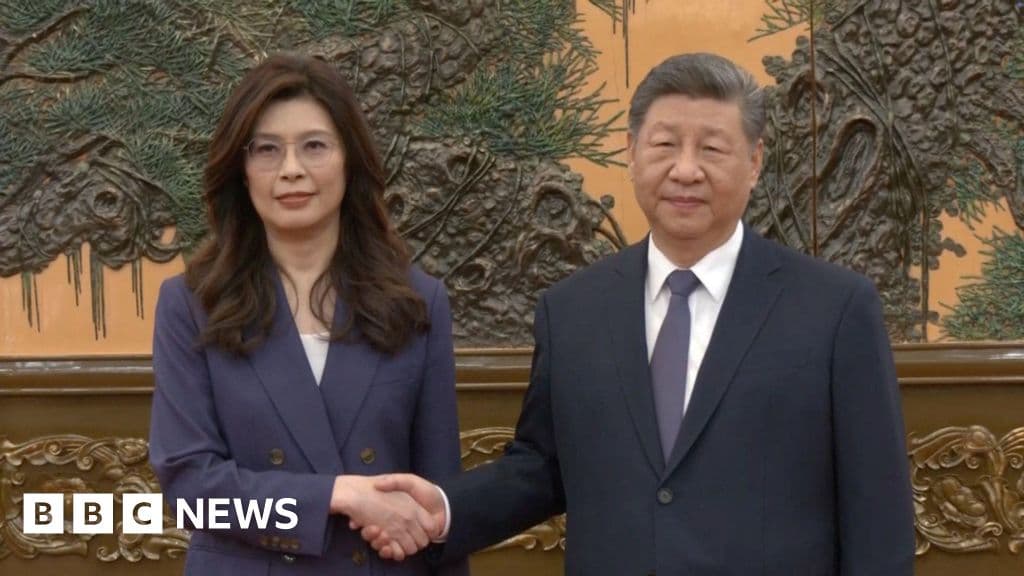
The leader of Taiwan's main opposition party, Kuomintang (KMT) chair Cheng Li-wun, met with Chinese President Xi Jinping in Beijing, marking the first visit by a sitting KMT leader to mainland China in roughly ten years, according to BBC News.
The meeting represents a notable moment in cross-strait relations, which have remained strained under Taiwan's current ruling party, the Democratic Progressive Party (DPP). The KMT has historically maintained closer ties with Beijing compared to the DPP, which leans toward greater assertion of Taiwan's distinct identity.
Background to the visit
The KMT governed Taiwan for much of the 20th century and oversaw the last significant period of warmer relations with the mainland under former president Ma Ying-jeou. Since losing power, the party has continued to advocate for dialogue with Beijing as a path toward stability across the Taiwan Strait.
Cheng's visit comes at a time of elevated military and diplomatic tensions in the region, with Beijing maintaining that Taiwan is part of Chinese territory and reserving the right to use force if necessary, while Taipei's current government has pushed back against that position.
Significance of the meeting
A face-to-face meeting between a sitting KMT leader and Xi Jinping is considered symbolically significant, as such high-level cross-party contacts have been rare in recent years. The visit signals that informal channels between the KMT and the Chinese Communist Party remain open, even as official government-to-government communication between Taipei and Beijing has largely stalled.
The KMT, as the opposition party, does not hold executive power in Taiwan and cannot negotiate formal agreements on behalf of the government. Nevertheless, such visits are often watched closely by analysts as indicators of the broader political climate surrounding cross-strait relations.
Reactions and context
The visit is likely to draw scrutiny from Taiwan's ruling DPP and its supporters, who have previously raised concerns about opposition engagement with Beijing. Critics of such meetings argue they can be used by China for propaganda purposes or to create the impression of broader Taiwanese support for reunification.
Supporters of the engagement, including voices within the KMT, argue that maintaining dialogue is essential to preventing miscalculation and reducing the risk of conflict.
The BBC reported the visit without detailing the specific content of the discussions between Cheng and Xi. Further details on any statements or agreements emerging from the meeting were not immediately available.