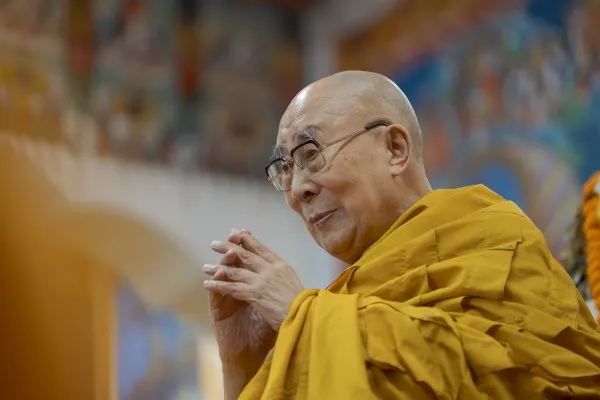
The question of who will succeed the 14th Dalai Lama is emerging as one of the most consequential geopolitical disputes of the coming decade, pitting centuries-old Tibetan Buddhist tradition against the authority of the Chinese state, according to an analysis published by The Diplomat.
At the heart of the conflict is a fundamental disagreement over who holds the legitimate power to identify the next Dalai Lama. Tibetan Buddhist tradition holds that the reincarnation is identified through a spiritual process guided by senior religious figures, visions, and signs. The current Dalai Lama, Tenzin Gyatso, now in his late eighties, has indicated he intends to play a role in shaping that process before his death.
Beijing's competing claim
China's government insists it holds the authority to approve religious reincarnations within its borders, a position rooted in a disputed historical practice and codified in a 2007 regulation requiring state approval for all reincarnations of living Buddhas. Beijing has previously exercised this claim in the case of the Panchen Lama, a figure whose recognition is itself intertwined with the Dalai Lama succession process.
In 1995, China rejected the Dalai Lama's selection of six-year-old Gedhun Choekyi Nyima as the 11th Panchen Lama. The boy disappeared shortly afterward and has not been seen publicly since. China installed its own candidate, Gyaincain Norbu, in his place - a move that remains unrecognized by most Tibetan Buddhists in exile and by human rights organizations.
The stakes for Tibetan identity
For Tibetans, the Dalai Lama is not merely a religious figurehead but the central symbol of cultural and national identity. A Beijing-appointed successor would, in the view of Tibetan exile communities and many religious scholars, lack spiritual legitimacy and could be used as a political instrument to consolidate Chinese control over Tibet's religious institutions.
The Dalai Lama has previously suggested his reincarnation could occur outside Chinese-controlled territory, potentially in India, where the Tibetan government-in-exile is based in Dharamsala. Such a move would create two competing claimants to the title - one recognized by Tibetan Buddhists worldwide and one backed by Beijing.
International dimensions
The dispute carries implications beyond Tibet. Several Western governments, including the United States, have passed legislation affirming the right of Tibetan Buddhists to determine their own religious succession free from state interference. China has rejected such measures as violations of its sovereignty.
As The Diplomat notes, the succession battle is set to become a defining test of the broader tension between religious freedom, national self-determination, and the reach of state power in the years ahead.