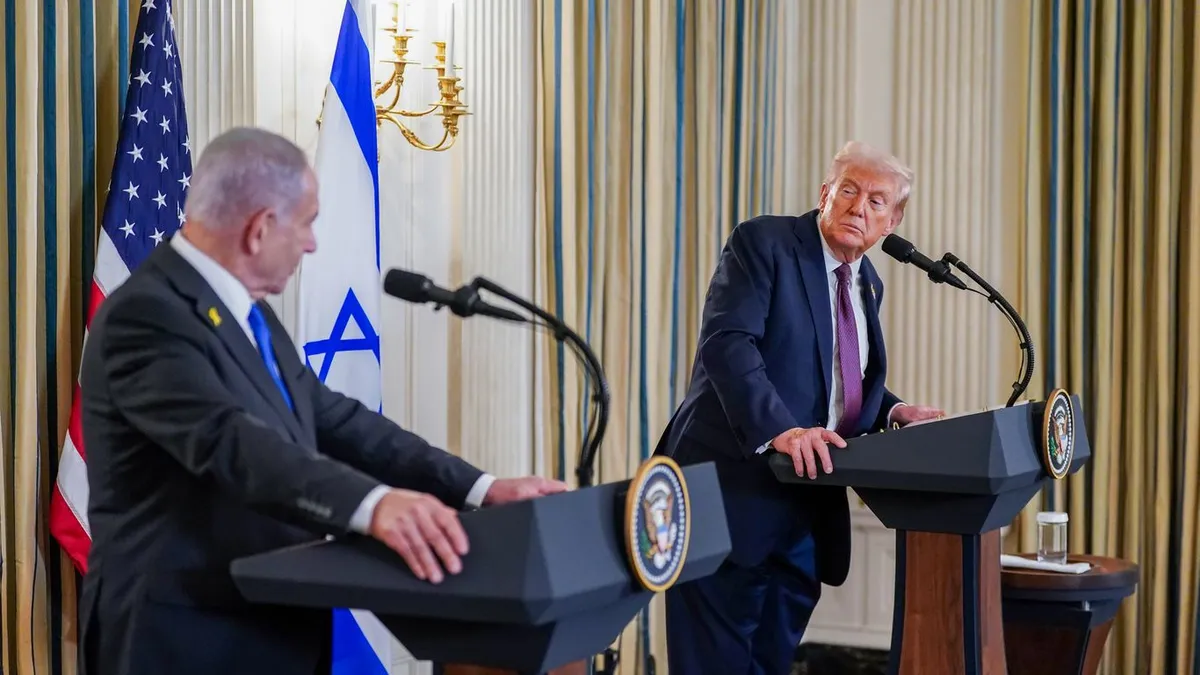
Donald Trump has suggested that negotiations with Iran could resume within days, telling reporters he expected no need to extend a two-week ceasefire set to expire on April 21.
"I think you're going to be watching an amazing two days ahead," Trump said, according to The Guardian, in remarks that pointed toward a potential resumption of peace talks in Pakistan.
The comments came as the US military claimed its naval blockade of the Strait of Hormuz had "completely halted economic trade" into Iran, a significant assertion that, if accurate, would place severe pressure on Tehran's economy.
Blockade and its claimed effects
The Strait of Hormuz is one of the world's most critical shipping corridors, through which a substantial share of global oil exports pass. A sustained blockade of the waterway would have far-reaching consequences not only for Iran but for energy markets internationally.

The US military's claim that the blockade has fully stopped economic trade into Iran has not been independently verified. Iran has not publicly confirmed the extent of any disruption to its trade flows.
Ceasefire timeline and diplomatic prospects
The current ceasefire, which appears to have paused active hostilities in the broader regional crisis, is scheduled to end on April 21. Trump indicated he did not anticipate needing to extend it, framing the coming days as potentially decisive.
Pakistan has emerged as a possible venue for renewed US-Iran diplomatic engagement. The choice of a neutral country in the region as a potential host underscores the complexity of direct engagement between Washington and Tehran, which have no formal diplomatic relations.
Trump's remarks to ABC reporter Jonathan Karl were characteristically open-ended, offering optimism without specific details about what any resumed talks might cover or who would participate.
Regional context
The developments come amid a wider Middle East crisis that has drawn in multiple state and non-state actors. The US naval presence in and around the Strait of Hormuz represents a significant escalation in military positioning, one that carries economic implications well beyond Iran's borders given the waterway's role in global energy supply chains.
Iran has previously threatened to close the strait in response to military or economic pressure, a move that analysts have long warned could trigger a global oil price shock. Whether Tehran retains the capacity or the willingness to act on such threats under current conditions remains unclear.
Further details on the state of US-Iran talks and the status of the blockade are expected in the coming days as the ceasefire deadline approaches.