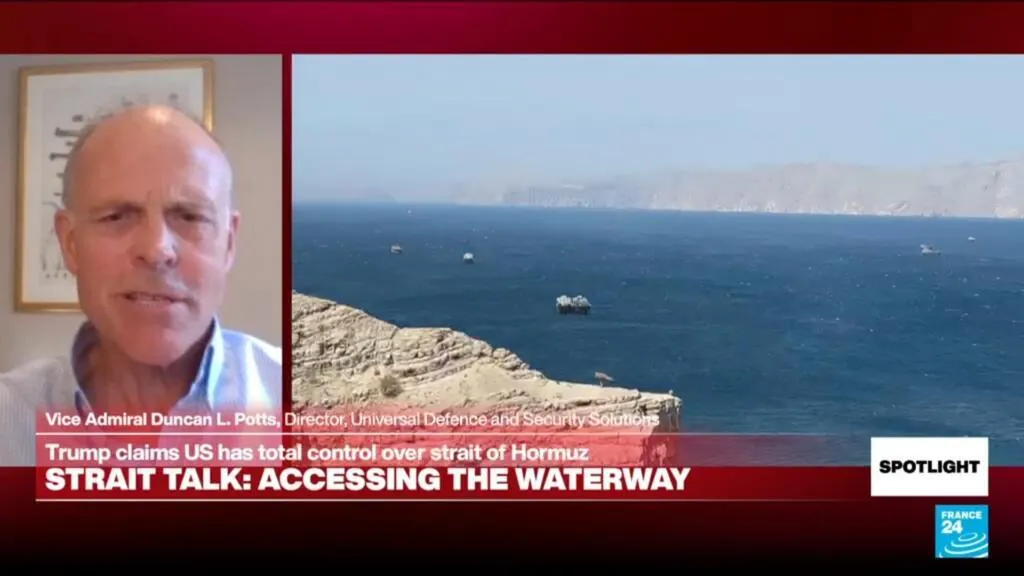
President Donald Trump issued an order Thursday directing the United States Navy to destroy any Iranian vessel caught laying mines in the Strait of Hormuz, raising the stakes in an already volatile standoff between Washington and Tehran.
The directive represents a significant escalation in the Gulf, where a fragile ceasefire has shown increasing signs of breaking down. The Strait of Hormuz is one of the world's most critical maritime chokepoints, through which a substantial portion of global oil supplies pass each day.

The move came as Iran imposed tolls on tanker traffic navigating the waterway, a measure that has added financial pressure on shipping operators and contributed to broader disruption in global energy markets, according to reporting by France 24's Carys Garland.
Economic fallout spreads
The ongoing Gulf standoff has begun to register measurable effects on the world economy. The combination of mine-laying threats, tanker tolls, and the prospect of open naval confrontation has unsettled energy traders and supply chain operators who depend on uninterrupted passage through the strait.

The Strait of Hormuz connects the Persian Gulf to the Gulf of Oman and serves as the primary export route for oil from Saudi Arabia, the United Arab Emirates, Kuwait, Iraq, and Iran itself. Any sustained disruption to navigation in the waterway would have immediate consequences for global oil prices and energy security.
Ceasefire under strain
The Trump administration's order reflects growing frustration with what U.S. officials have characterized as Iranian provocations. The mine-laying activity, if confirmed, would represent a direct threat to freedom of navigation - a principle the United States has long defended through naval presence in the region.
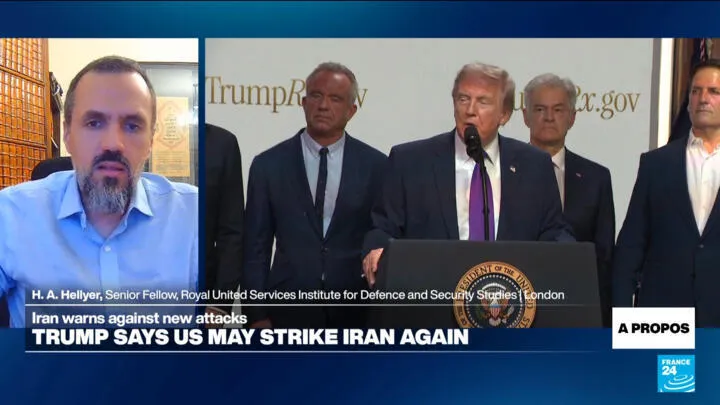
Iran has not immediately responded publicly to Trump's announced order. The situation remains fluid, with the ceasefire that had previously provided a degree of stability now appearing increasingly tenuous.
The U.S. Navy maintains a substantial presence in the Persian Gulf through the Bahrain-based Fifth Fleet, which has historically been responsible for patrolling the region and protecting commercial shipping lanes.
Analysts tracking the situation have warned that direct confrontation between American and Iranian naval forces carries the risk of rapid escalation, given the narrow geography of the strait and the high volume of military and commercial traffic operating in close proximity.
France 24 reported on the developments as international concern mounted over the potential for the standoff to spiral beyond the control of either party.