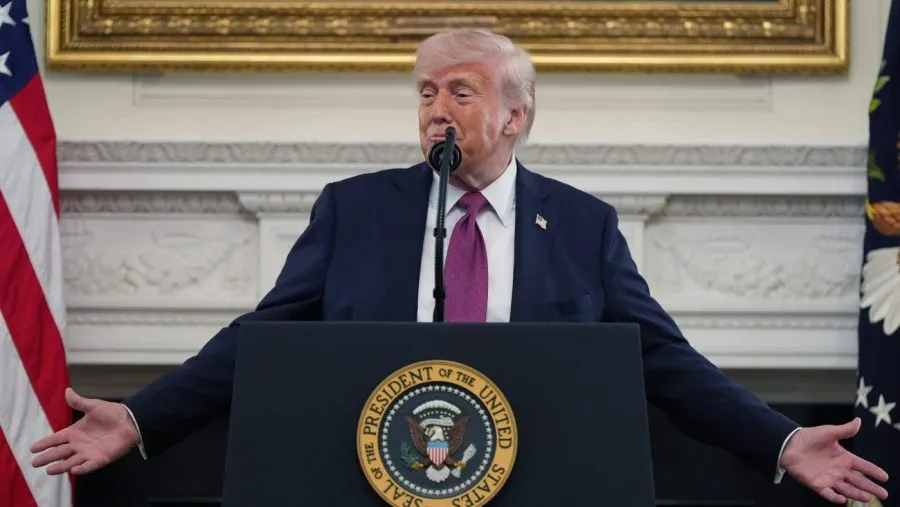
President Donald Trump on Wednesday accused Iran of keeping the Strait of Hormuz closed not out of strategic necessity, but to avoid appearing weak, arguing the closure is costing Tehran hundreds of millions of dollars per day.
Trump made the remarks shortly after the United States announced an extension of a ceasefire with Iran, according to reporting by The Hill. The timing of his comments underscored the fragile and publicly contested nature of the diplomatic pause between the two countries.
"Iran doesn't want the Strait of Hormuz closed, they want it open so they can make $500 Million Dollars a day," Trump wrote, suggesting the country is effectively losing that amount for every day the critical waterway remains blocked. He characterized Iran's continued closure as an attempt to preserve national pride rather than advance any practical goal.
Strategic and economic stakes
The Strait of Hormuz is one of the world's most critical maritime chokepoints. Roughly 20 percent of global oil trade passes through the narrow passage between Iran and Oman, making any disruption there a significant concern for international energy markets and global supply chains.
A prolonged closure would affect not only Iran's oil export revenues but also those of neighboring Gulf states and global consumers dependent on stable energy supplies.
Ceasefire backdrop
The comments came against the backdrop of an announced ceasefire extension between Washington and Tehran, the terms and duration of which have not been fully detailed in public statements. The extension suggests some level of ongoing diplomatic engagement, even as Trump's public messaging toward Iran remained sharp in tone.
Trump's framing positions the closure as economically irrational from Iran's perspective, an argument intended to press Tehran to reopen the waterway without framing it as a concession to the United States.
Iranian officials had not publicly responded to Trump's specific remarks at the time of reporting.
Broader context
Tensions over the Strait of Hormuz have escalated periodically over recent years, with Iran previously threatening to close the passage in response to U.S. sanctions and military pressure. The waterway has long served as a pressure point in broader disputes over Iran's nuclear program, regional influence, and bilateral relations with the United States.
The combination of a ceasefire extension and pointed public criticism from Trump reflects what analysts have described as a dual-track approach - maintaining a channel for de-escalation while applying continued rhetorical and economic pressure on Tehran.