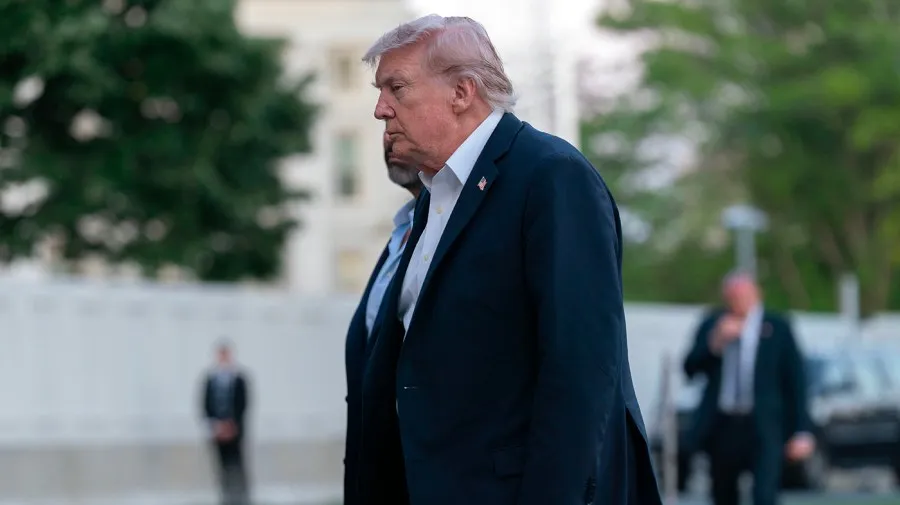
President Donald Trump's falling approval ratings are emerging as a potential liability for the Republican Party as it prepares to defend its slim congressional majorities in the 2026 midterm elections, according to reporting by The Hill.
A Washington Post-ABC News-Ipsos poll released Sunday found Trump's disapproval rating at 62 percent - a new high - while just 37 percent of respondents said they approved of his job performance. The figures represent a significant political challenge for a party that controls both chambers of Congress and the White House.
What the numbers mean for down-ballot races
Republicans currently hold what analysts describe as a fragile trifecta in Washington, with narrow margins in the House and Senate leaving little room for electoral losses. Historically, the party holding the White House tends to lose seats in midterm elections, and a sitting president's approval rating is widely viewed as one of the strongest predictors of that outcome.
Should Trump's numbers remain depressed heading into 2026, Republican candidates in competitive districts may face pressure to either distance themselves from the president or risk being dragged down by his unpopularity among independent and moderate voters - the very groups that often decide close congressional races.
A pattern with historical precedent
Midterm elections have long served as a referendum on the sitting president. In 2018, during Trump's first term, Democrats flipped 41 House seats and reclaimed the majority, in part due to Trump's approval ratings hovering below 50 percent. Similarly, in 2010, Democrats suffered significant losses under President Barack Obama amid economic uncertainty and public dissatisfaction.
The current numbers suggest Republicans face a structurally similar environment, though more than a year remains before voters go to the polls.
Republican response
The Hill's reporting indicates the polling data is causing concern within the GOP, though party officials have not publicly indicated any shift in strategy. Republicans have pointed to their legislative agenda and economic priorities as factors they believe will improve the party's standing before 2026.
Democrats, meanwhile, are expected to use Trump's approval numbers as a central organizing tool in their efforts to recruit candidates and raise funds for competitive House and Senate contests.
With congressional control potentially at stake, the trajectory of Trump's approval rating over the coming months is likely to be closely watched by strategists on both sides of the aisle.