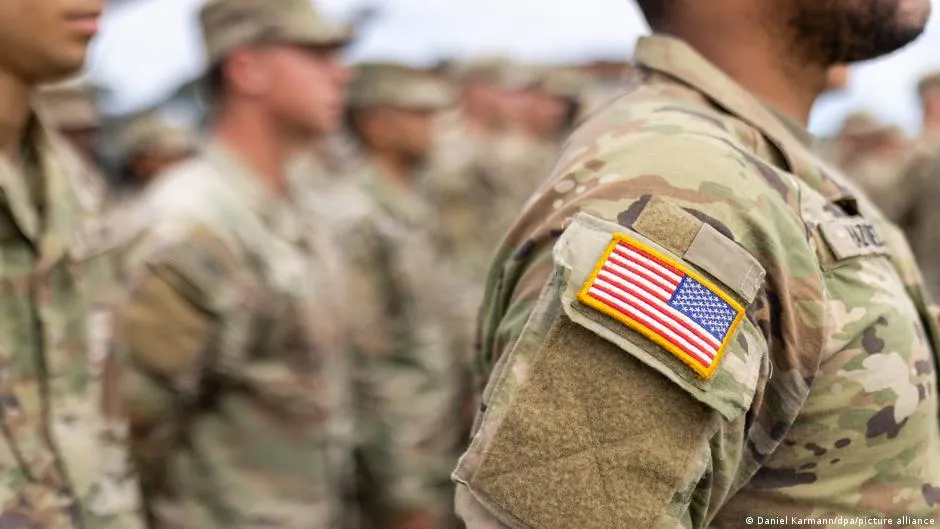
President Donald Trump is planning to reduce the number of US troops stationed in Germany, according to reporting by Deutsche Welle, raising fresh questions about the future of one of America's most significant overseas military footprints.
Germany currently hosts more US military personnel than any other country in Europe. American forces are spread across several major installations, with key bases located in Ramstein, Wiesbaden, Stuttgart, and Grafenwoehr, among others. These facilities have served as cornerstones of NATO's collective defense posture since the end of World War II.
Strategic value of the bases
Ramstein Air Base, situated in the state of Rhineland-Palatinate, is considered one of the most strategically important US installations in the world. It serves as a hub for American air operations across Europe and Africa, and has played a central logistical role in support missions to Ukraine since Russia's full-scale invasion in 2022.
US Army Europe and Africa is headquartered in Wiesbaden, while US European Command and US Africa Command are both based in Stuttgart. These command structures coordinate military activities across two entire continents, underscoring Germany's role as a nerve center for American power projection beyond its borders.
The Grafenwoehr training area in Bavaria is among the largest military training grounds in Europe and has been used extensively to prepare Ukrainian troops, according to Deutsche Welle.
Troop numbers and history
At the height of the Cold War, the United States maintained well over 200,000 troops in Germany. That figure has declined dramatically in subsequent decades. Current estimates place the number at roughly 35,000 to 40,000 personnel, a level that has remained relatively stable in recent years but could shift significantly under Trump's proposed reductions.
The US military presence in Germany was originally established as part of the post-World War II occupation and later became a pillar of NATO's deterrence strategy against the Soviet Union. After the Cold War, the network of bases was consolidated but never dismantled, reflecting the enduring strategic logic of forward-deployed forces in Europe.
Political and alliance implications
Any significant drawdown would have implications that extend beyond bilateral US-German relations. NATO allies rely on the German-based command infrastructure for coordination and interoperability. A reduction in forces could also complicate ongoing Western support efforts for Ukraine.
Trump has long criticized European NATO members for what he characterizes as insufficient defense spending, and Germany has historically been a frequent target of that criticism. Berlin has in recent years moved to increase its defense budget, in part to address those concerns.
German officials have not publicly responded in detail to the reported plans, and the scope and timeline of any troop reduction remain unclear, according to Deutsche Welle's reporting.