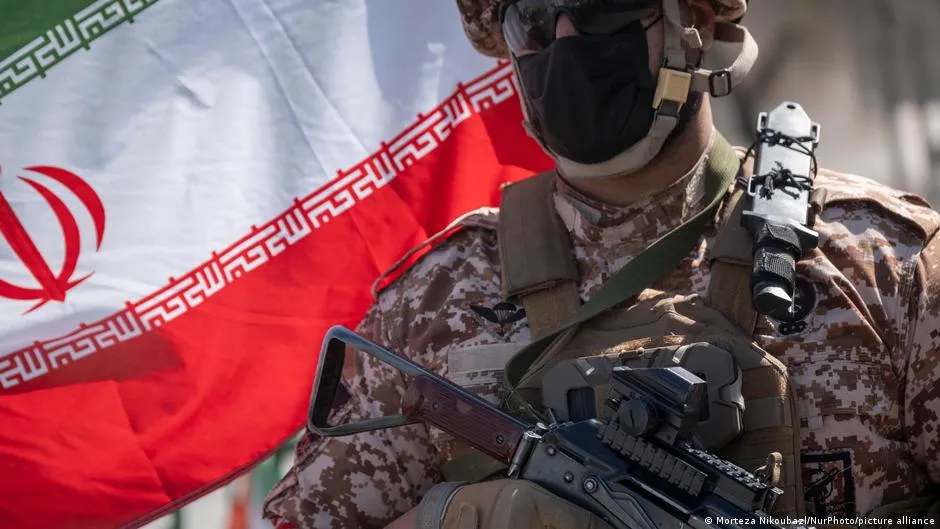
Something seismic is happening inside Iran, and it has nothing to do with nuclear centrifuges (well, not entirely). According to an analysis by Deutsche Welle, the Islamic Republic - founded on the idea that clerics should govern - is undergoing a slow-motion coup from within its own power structure.
The short version: the turbans are losing ground to the boots.
A republic built on religious authority - for now
When Ayatollah Khomeini established the Islamic Republic in 1979, the whole point was velayat-e faqih - rule by the supreme Islamic jurist. Clerics were supposed to be the top of the food chain, with the Revolutionary Guard (IRGC) serving as the muscle that enforced the vision. Think brain and brawn.
But brawn, as history keeps reminding us, has a habit of getting ambitious.
According to DW's reporting, analysts are now pointing to a significant shift: the IRGC is emerging as the dominant force in Iranian politics, economics, and security - at the expense of the clerical establishment that was supposed to be running the show.
War and succession as accelerants
Two major factors appear to be driving this shift, per the DW analysis. First, the pressures created by regional conflict - particularly Iran's proxy engagements and direct confrontations - have elevated military decision-makers at the expense of theological ones. When the country is essentially on war footing, generals get a bigger seat at the table. Then they start sitting at the head of it.
Second, the question of succession looms large. Supreme Leader Ali Khamenei is 85 years old. The clerical pipeline for replacing him is not exactly bursting with obvious candidates who command broad legitimacy. The IRGC, meanwhile, has spent decades building parallel economic empires, intelligence networks, and political influence - positioning itself to be indispensable regardless of who nominally sits at the top.
What this actually means
Analysts cited in the DW report describe this as a weakening of the system's clerical foundations - not a sudden collapse, but a structural erosion. The Islamic Republic still wraps itself in religious symbolism, but the levers of real power are increasingly controlled by military and security figures rather than seminary-trained jurists.
For ordinary Iranians who already deal with IRGC-linked companies dominating the economy, this might feel less like a revelation and more like confirmation of something they have lived for years.
The irony is almost too neat: a revolution that overthrew a powerful military establishment (the Shah's imperial forces) to install religious rule may be completing a full circle - ending up as a state where a different military establishment calls the shots, just wearing the revolution's colors.
Khomeini's ghost is presumably not pleased.