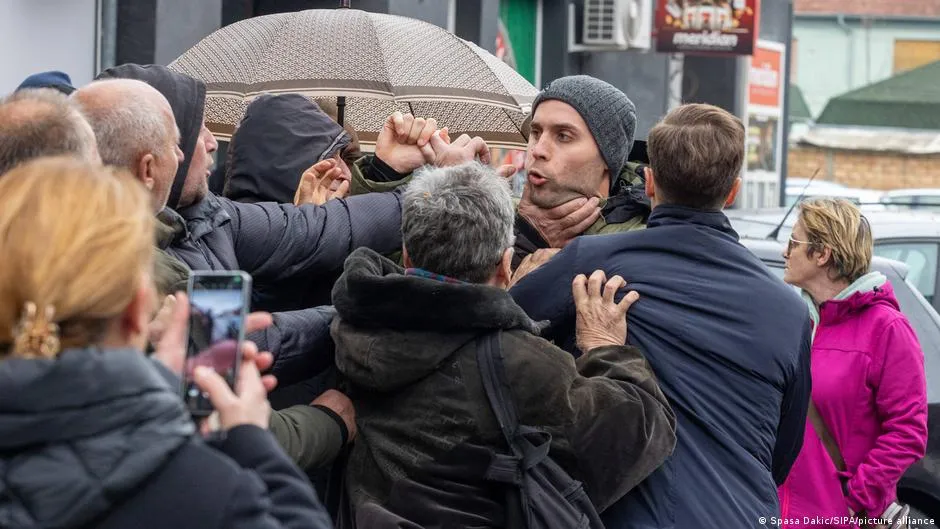
Serbia's ruling Serbian Progressive Party (SNS) - the political vehicle of strongman President Aleksandar Vucic - held on to power in local elections across the country. But if you look closely at the margins, "held on" might be a generous way to put it.
According to a report by Deutsche Welle, the SNS secured victories in multiple municipalities, but in several cases the winning margin came down to just a few hundred votes. For a party that has dominated Serbian politics for over a decade with the subtlety of a sledgehammer, that is a striking development.
From landslides to photo finishes
The narrowing vote gaps are being read by analysts as a sign that Serbia's political landscape is shifting beneath the SNS's feet - slowly, but noticeably. The backdrop here matters enormously: Serbia has been gripped by months of anti-government protests, fueled in large part by public fury over the deadly collapse of a canopy at the Novi Sad railway station in November 2024, which killed fifteen people. Demonstrators have blamed government negligence and endemic corruption for the disaster, and the protests have shown little sign of losing steam.
The fact that those protests are apparently translating - at least partially - into tighter election results is significant. Street anger and ballot box anger are not always the same thing, and opposition movements in Serbia have historically struggled to convert momentum into actual votes.
Not a defeat, but maybe a warning shot
To be clear: the SNS did not lose. Vucic's machine is still standing, still winning, and still controlling local governments across Serbia. Anyone declaring this the beginning of the end for SNS dominance is probably getting ahead of themselves.
But the trend line is uncomfortable for a party accustomed to comfortable margins. A win by 300 votes in a municipality where you used to cruise by thousands is the political equivalent of your boss saying your performance is "satisfactory" after years of "excellent" - technically fine, but everyone in the room knows something has changed.
DW's reporting suggests the results point to growing momentum for the opposition and the protest movement, even if that momentum has not yet reached a tipping point.
What comes next
The big question is whether the opposition can build on these narrower margins or whether the SNS will recalibrate and shore up its base before the next major electoral test. Serbian politics has a long history of opposition movements that peaked too early.
For now, though, Vucic's party won - just a lot less convincingly than it probably wanted to.