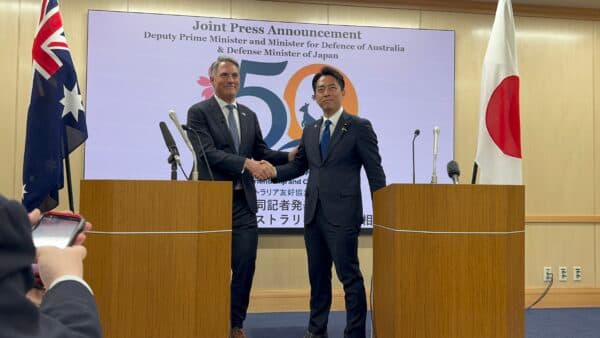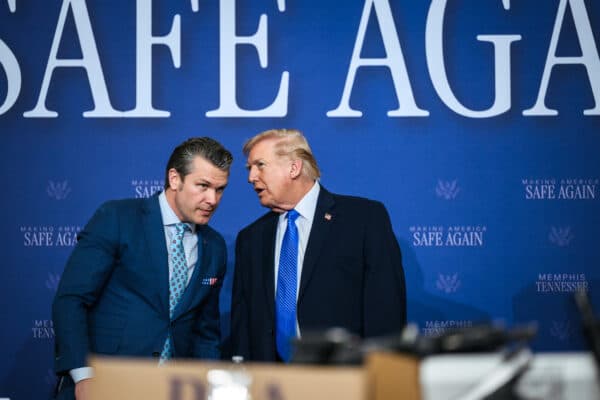
As tensions between major powers strain multilateral institutions and long-standing alliances show cracks, much of the Western world has reacted with alarm to what many describe as a rupture in the post-World War II global order. In East Asia, however, the response has been notably more measured - and according to analysis published by The Diplomat, that composure stems from hard-won regional experience.
East Asian nations have spent decades navigating the simultaneous pressures of economic interdependence and geopolitical rivalry, developing a dexterity in foreign policy that many Western-aligned states are only now being forced to cultivate.
A region shaped by competing forces
Countries across East Asia have long found themselves caught between major power interests - most acutely between the United States and China. Nations such as South Korea, Japan, Vietnam, and the members of the Association of Southeast Asian Nations (ASEAN) have routinely been required to maintain productive economic relationships with Beijing while simultaneously depending on Washington for security guarantees.
This balancing act, which some analysts describe as "strategic ambiguity," has become a defining feature of the region's foreign policy architecture. The approach stands in contrast to the more binary alliance structures that characterized Cold War-era Western alignments.
Cooperation and competition as coexisting realities
The Diplomat's analysis notes that East Asia has long treated competition and cooperation not as opposing forces but as overlapping realities that must be managed simultaneously. Regional trade frameworks, bilateral investment agreements, and multilateral security dialogues have all been constructed with this dual reality in mind.
That framework is now being tested more severely than at any point in recent memory, the analysis suggests. Escalating trade disputes, territorial tensions in the South China Sea and Taiwan Strait, and the broader decoupling of technology supply chains are placing compounding pressure on governments across the region.
Lessons other regions may now need to learn
For countries in Europe and the Americas that built their foreign policy assumptions on a more stable rules-based international system, the current moment has demanded rapid adaptation. East Asian policymakers, by contrast, have never fully relied on that system as their primary security framework.
The result, according to The Diplomat, is a region that enters the current period of global disruption with a more pragmatic - if still deeply challenged - set of tools for managing uncertainty.
Whether that experience translates into genuine resilience, or simply a more practiced form of vulnerability, remains an open question as the broader international order continues to shift.