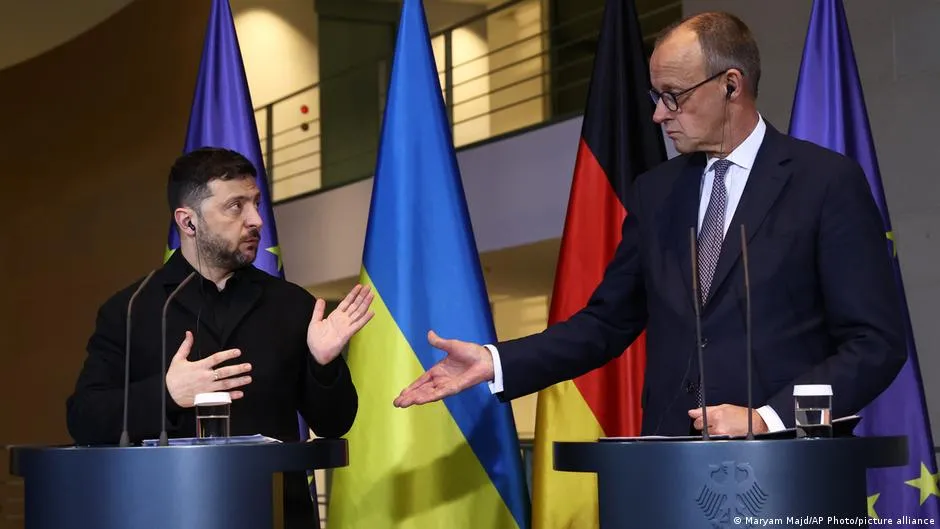
Ukrainian President Volodymyr Zelenskyy and his full cabinet traveled to Berlin on Tuesday for wide-ranging talks with German Chancellor Friedrich Merz and senior members of the German government, according to reporting by DW.
The meetings covered three main areas: continued military and financial aid to Ukraine, security arrangements, and the long-term task of rebuilding war-damaged Ukrainian infrastructure and institutions.
A high-level diplomatic gathering
The scale of the Ukrainian delegation - bringing the entire cabinet to Berlin - signals the significance both governments attach to the bilateral relationship. Germany has been one of Ukraine's most important European backers since Russia launched its full-scale invasion in February 2022, providing weapons, financial support, and humanitarian assistance.
Chancellor Merz, who took office earlier this year, has maintained Germany's position as a key supporter of Kyiv. Tuesday's talks represent one of the most comprehensive diplomatic engagements between the two governments since Merz assumed the chancellorship.
Key issues on the table
Security guarantees for Ukraine remain a central and unresolved question in European diplomacy. With negotiations over a potential ceasefire still uncertain, Kyiv has pressed its partners for binding commitments that would deter future Russian aggression. Germany, alongside other European allies, has been discussing what form such guarantees might take outside of full NATO membership.
Reconstruction financing is also a pressing concern. Estimates for rebuilding Ukraine run into the hundreds of billions of dollars, and international donors, including Germany, have been working to establish frameworks for long-term investment and aid delivery.
Military assistance continues to form a core part of the agenda. Germany has supplied Ukraine with air defense systems, armored vehicles, and artillery, and further commitments are expected to be discussed during the Berlin meetings.
Broader European context
The Berlin talks come as European leaders work to maintain unity in their support for Ukraine while managing domestic economic pressures and differing views on how to approach potential peace negotiations. Germany, as Europe's largest economy, plays an outsized role in shaping the continent's collective response.
DW is providing live coverage of the meetings as details emerge throughout the day.