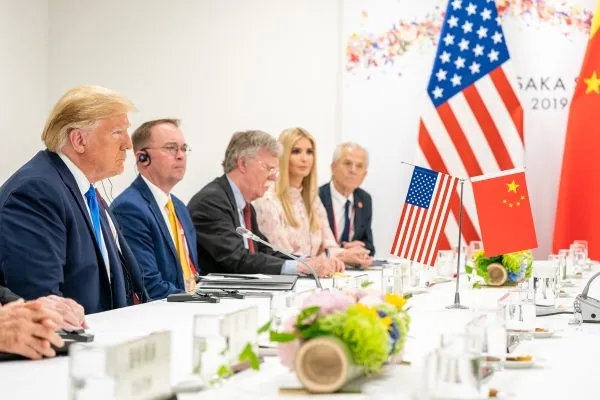
As the United States and China prepare for a high-level summit following a period of sharp escalation, analysts are cautioning that the resumption of diplomatic contact is likely to be interpreted incorrectly by observers on both sides.
According to analysis published by The Diplomat, the return to top-level engagement between Washington and Beijing should be understood as a pragmatic adjustment to managing tensions, not as a signal that either government is prepared to make meaningful concessions on core disputes.
What the summit does - and does not - represent
The two powers have significant unresolved differences across multiple fronts, including trade and tariffs, Taiwan, technology restrictions, and competing claims in the South China Sea. None of those issues are expected to be resolved through summit-level talks.
The Diplomat's analysis argues that direct communication between senior officials serves a functional purpose: reducing the risk of miscalculation and managing the pace of rivalry rather than resolving its underlying causes. In that framing, the summit is less a diplomatic breakthrough and more a circuit breaker.
This distinction matters because public and media reactions to high-profile summits often swing between optimism and disappointment. If the meeting is treated as a potential turning point, the absence of tangible agreements can itself become a source of further friction.
A pattern of managed competition
The meeting fits into a broader pattern that has characterized China-US relations in recent years - periods of confrontation punctuated by carefully staged moments of dialogue, none of which have reversed the overall trajectory toward strategic competition.
Both governments have domestic political incentives to demonstrate strength rather than accommodation. For Washington, any appearance of softening toward Beijing carries political risk. For Beijing, engagement must not be seen as capitulation to American pressure.
The result, analysts suggest, is a style of diplomacy aimed primarily at stabilizing the relationship at a functional level, buying time, and managing optics on both sides, without resolving the deeper structural rivalries that drive the tension.
Stakes for global observers
The summit carries significance beyond the bilateral relationship. Markets, allied governments in Europe and Asia, and smaller nations caught between the two powers will all be watching for signals about the direction of the world's most consequential geopolitical relationship.
The Diplomat's analysis suggests those observers should resist drawing firm conclusions from the fact of the meeting itself. Engagement, in this context, is a tool of competition management - not a sign that competition is abating.