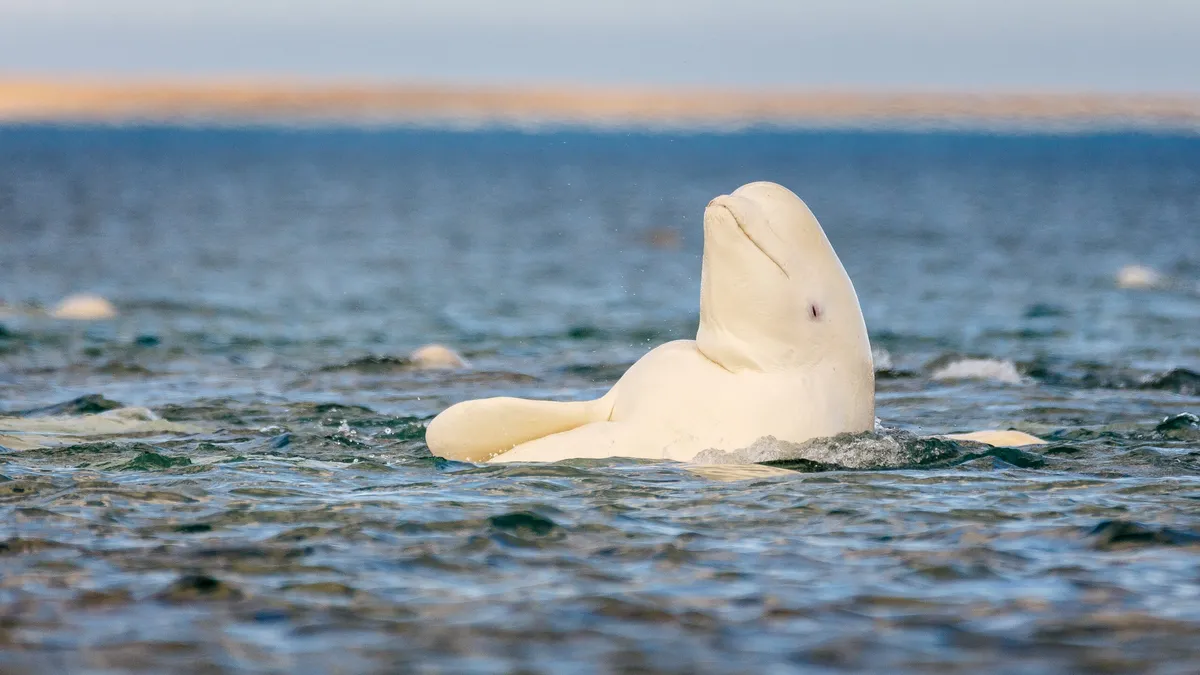
Beluga whales - those gloriously round, perpetually smiling blobs of the ocean - have apparently been aware of how ridiculously cute they look this whole time. According to new research reported by Ars Technica, belugas have demonstrated behavior consistent with passing the mirror self-recognition test, placing them in a very exclusive club of animals scientists believe can recognize their own reflection.
What even is the mirror test?
The mirror test, formally known as the mirror self-recognition (MSR) test, was developed in the 1970s and has long been used as a proxy for self-awareness in animals. The basic idea: put a mark on an animal where it can't see it directly, show it a mirror, and watch whether it investigates the mark on its own body rather than treating its reflection as another animal. If it does, congratulations - your test subject is apparently self-aware.
Previously, the list of confirmed passers has included great apes (humans included, thankfully), bottlenose dolphins, Asian elephants, Eurasian magpies, and some fish - which, yes, caused a minor existential crisis in the scientific community when it happened. Belugas now reportedly join this roster.
But here's the twist - scientists are also side-eyeing the test itself
In a delicious case of scientific irony, the very paper confirming belugas can pass the mirror test also invites scrutiny of whether the mirror test itself is still a valid benchmark. As Ars Technica notes, there is ongoing debate in the scientific community about what exactly the test measures and whether failing it really means an animal lacks self-awareness - or just that the test is poorly designed for certain species.

Some animals may lack the physical dexterity to investigate a mark on their body, or may simply not care about visual appearance the way primates do. A dog, for instance, relies heavily on smell and largely ignores mirrors - but few people who have owned a dog would seriously argue the animal has zero sense of self.
So what does this mean for belugas?
At minimum, it means beluga whales have a level of cognitive sophistication that scientists find genuinely impressive. These are already known to be highly social, communicative animals - sometimes called the "canaries of the sea" for their extensive vocalizations. Adding possible self-recognition to that resume only deepens the case that they are far more complex minds than their goofy smile might suggest.
Whether the mirror test remains the gold standard for measuring animal self-awareness is now, fittingly, a question scientists are holding up to the light and examining very carefully - much like a beluga staring at its own reflection.