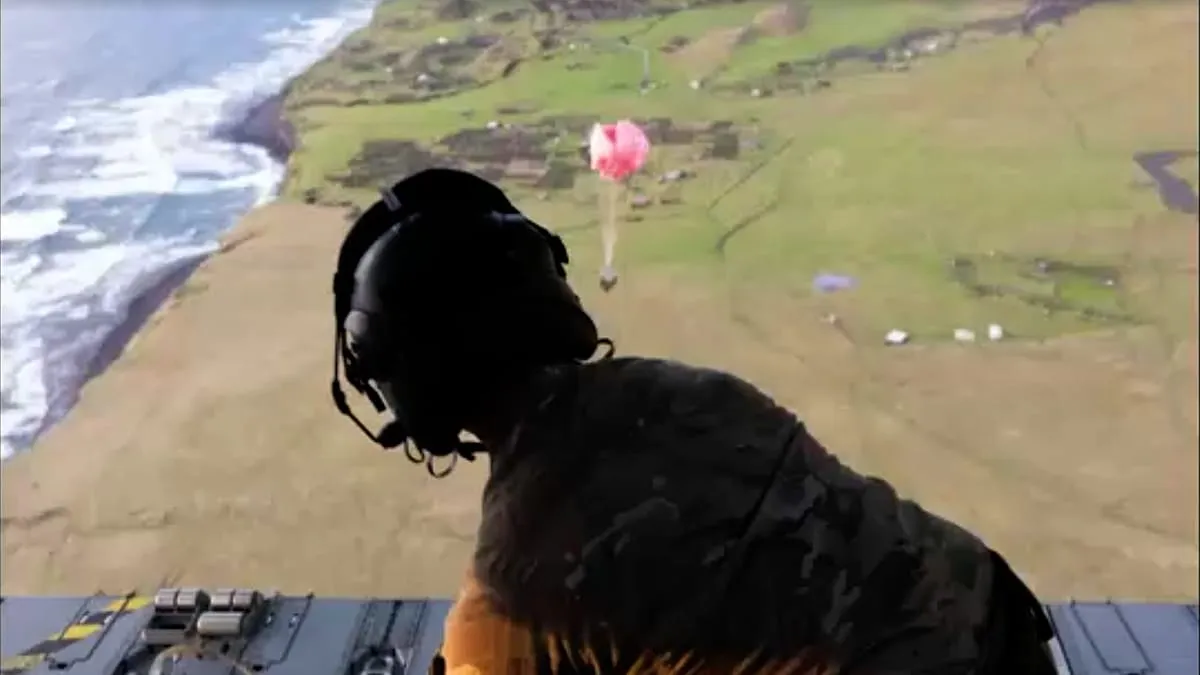
In a move that sounds suspiciously like the opening act of a disaster movie, the British military has parachuted medics and emergency supplies onto Tristan da Cunha - the most remote inhabited island on the planet - after a resident was suspected of contracting hantavirus, according to Euronews.
For those who skipped geography class (no judgment), Tristan da Cunha is a tiny volcanic speck sitting in the middle of the South Atlantic Ocean, roughly 2,400 kilometers from the nearest mainland. It has a population of around 250 people, zero airport, and approximately zero easy ways to get help when things go sideways medically. The nearest hospital is essentially "take a very long boat ride and hope for the best."
So what even is hantavirus?
Hantavirus is a rodent-borne illness transmitted primarily through contact with infected rodents or their droppings. It can cause Hantavirus Pulmonary Syndrome, a serious respiratory condition that, in some cases, can be life-threatening. It is not something you want to be dealing with on an island where the next supply ship is weeks away.
The good news - and this is important - is that hantavirus does NOT spread person-to-person, so the island's 250-odd residents were not in danger of a full-blown outbreak. The concern was getting the suspected patient proper medical evaluation and care, fast.
Enter the British Army, presumably doing their best action-hero impression
With no runway on the island, a standard medical evacuation was simply not an option. The UK military response involved parachuting medics and supplies directly onto the island - which, when you think about it, is an absolutely extraordinary logistical flex for what is, at this stage, still a suspected case.
Tristan da Cunha is a British Overseas Territory, meaning the UK government has responsibility for its residents' welfare. To their credit, they did not apparently respond with a shrug and a pamphlet. They dropped people out of aircraft over the Atlantic Ocean.
The bigger picture nobody is talking about
This incident quietly highlights a genuinely fascinating and under-discussed challenge: what does healthcare look like for the 250 humans who have chosen - or were born into - a life on the world's most isolated island? Medical emergencies there do not come with the luxury of a 20-minute ambulance ride. Every health crisis is, by definition, a logistical nightmare.
As of the Euronews report, it remains a suspected hantavirus case and has not been officially confirmed. The patient's condition and the outcome of the military deployment had not been fully detailed in available reporting.
Still: paratroopers. For a rat virus. On a volcano in the Atlantic. 2026 is something else.