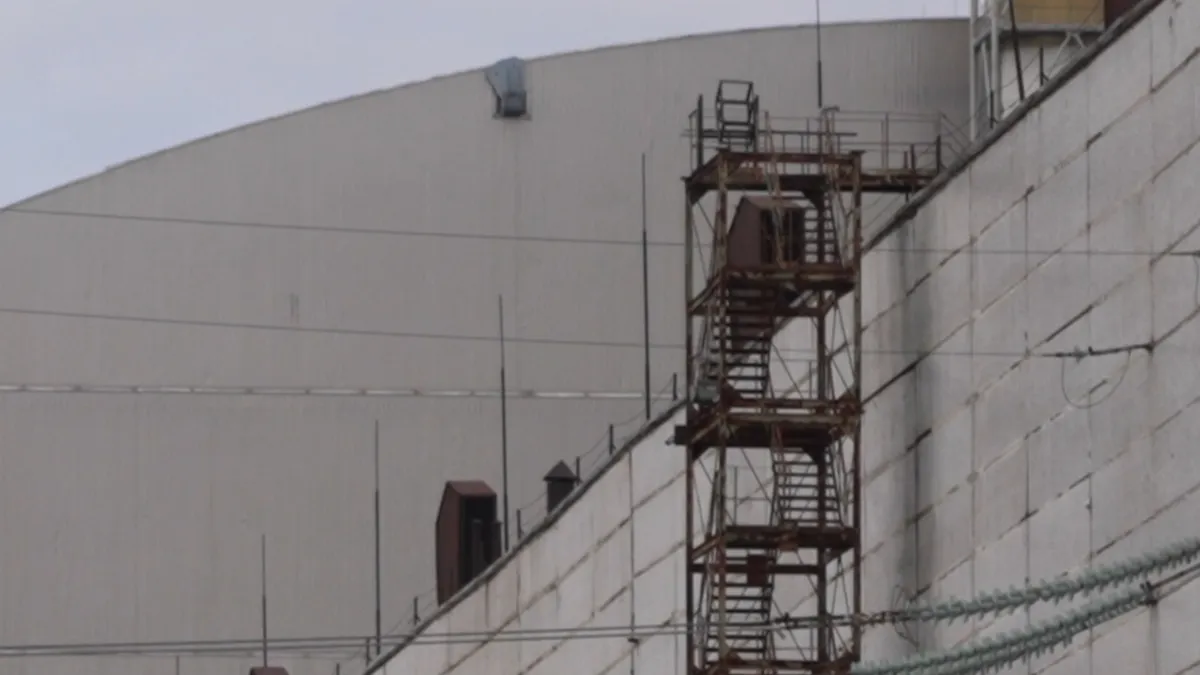
Forty years ago on April 26, 1986, reactor number four at the Chernobyl Nuclear Power Plant in northern Ukraine did the unthinkable - it blew its lid in the most catastrophic nuclear accident the world has ever seen. And we mean that literally, not in the Reddit-hyperbole sense.
According to Al Jazeera, the world is marking four decades since the disaster, which released enormous amounts of radioactive material across Europe and fundamentally changed how humanity thinks about nuclear energy, emergency management, and the general concept of "what's the worst that could happen?"

A recap for the people in the back
The explosion and subsequent fire at the Soviet-era plant sent a radioactive plume drifting across large swaths of Europe. The nearby city of Pripyat, built specifically to house plant workers and their families, was evacuated within 36 hours - but not before tens of thousands of residents unknowingly went about their Saturday morning while invisible radiation did its thing.
The Soviet government's initial response was, to put it diplomatically, not their finest hour. Secrecy and denial were the orders of the day, until the radiation alarms started going off at a nuclear plant in Sweden - some 1,100 kilometers away. At that point, the cat was somewhat out of the bag.

The numbers that still make scientists wince
- An estimated 350,000 people were eventually evacuated or resettled from affected areas.
- The exclusion zone around the plant covers roughly 2,600 square kilometers - and remains largely uninhabited to this day.
- A massive concrete-and-steel containment structure, known as the New Safe Confinement, was completed in 2016 to contain the still-radioactive remains of the reactor.
The long shadow
Chernobyl's legacy is complicated and deeply layered. It accelerated the decline of public trust in Soviet institutions, arguably contributing to the unraveling of the USSR itself. It also sparked serious global debate about nuclear energy safety - a debate that is, ironically, heating up again today as governments scramble to find low-carbon energy sources to fight climate change.
The exclusion zone has, in a twist nobody predicted, become something of an accidental wildlife sanctuary, with wolves, bison, and lynx roaming through abandoned Soviet apartment blocks. Nature, as always, is doing its own thing regardless of what we think about it.
And Pripyat? It still stands - empty, eerie, and increasingly popular with a certain kind of adventurous tourist. The Ferris wheel that never opened remains one of the most photographed objects in Eastern Europe, which feels like an appropriately haunting metaphor for the whole affair.
Forty years on, the world remembers. Mostly because the zone won't let us forget - it'll be uninhabitable for another 20,000 years or so.