The Caspian-Central Asia trade corridor is facing mounting logistical challenges as growing cargo volumes push existing infrastructure beyond its limits, according to reporting by Euronews Business.
Rail lines, ports and pipelines across the region are struggling to keep pace with rising trade demand, creating bottlenecks that could slow the movement of goods between Asia and Europe. The strain reflects broader shifts in global trade patterns that have directed more traffic through Central Asia in recent years.

The Middle Corridor gains ground
Amid these pressures, the Middle Corridor - a trans-Caspian route linking China and Central Asia to Europe via the Caucasus and Turkey - is emerging as an increasingly relevant alternative to traditional trade arteries.
The route bypasses Russia entirely, running through Kazakhstan, across the Caspian Sea to Azerbaijan and Georgia, before continuing westward. Its appeal has grown in part due to disruptions and sanctions affecting more northern overland routes following Russia's invasion of Ukraine in 2022.

However, limited port capacity at key Caspian transit points, insufficient rail connectivity and a lack of coordinated customs procedures across multiple national borders remain significant obstacles to scaling up throughput on the corridor.
Infrastructure investment under scrutiny
Regional governments and international development institutions have identified infrastructure investment as a priority for unlocking the corridor's potential. Expansions to port facilities at Aktau in Kazakhstan and Alat in Azerbaijan have been among the projects cited as necessary to ease congestion.
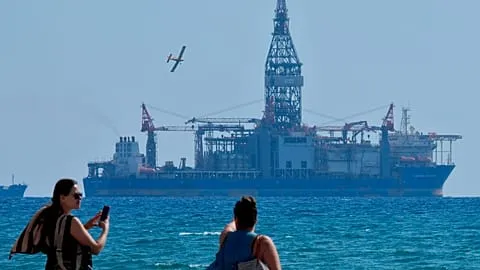
Multimodal coordination - linking sea, rail and road networks more efficiently - has also been highlighted as a critical need, as fragmented logistics chains add time and cost to transit shipments.
The European Union, which has strategic interests in diversifying its supply chains and reducing dependence on single trade routes, has expressed support for developing the Middle Corridor as a long-term commercial link.
Broader context
Central Asia's role in global trade has expanded significantly as companies and governments seek alternatives to routes disrupted by geopolitical tensions. The region sits at a geographic crossroads, and its landlocked nations depend heavily on reliable transit corridors for exports of commodities including energy, metals and agricultural products.
The pace at which infrastructure can be expanded and integrated will determine whether the Caspian-Central Asia corridor can fulfil its potential as a major east-west trade artery, or whether capacity constraints continue to limit its growth.