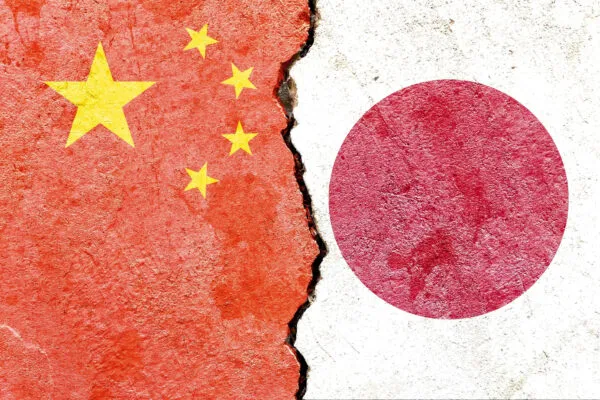
The rivalry between China and Japan is shifting into a more hazardous phase, driven not by deliberate aggression from either side but by deepening mutual suspicion about the other's intentions, according to analysis published by The Diplomat.
Both governments have stated positions that rule out armed conflict, yet the dynamic between the two Asian powers has grown increasingly volatile as each interprets the other's military buildup and strategic posturing as preparations for war.
A spiral of mutual misreading
The core danger, as outlined in the analysis, lies in the gap between stated intentions and perceived intentions. Japan has significantly expanded its defense spending in recent years, committing to double its military budget to reach 2 percent of GDP by 2027 - a historic shift from decades of constitutional restraint. China has framed these moves as evidence of Japanese remilitarization.
From Tokyo's perspective, China's continued expansion of its naval presence in the East China Sea, including repeated incursions near the disputed Senkaku Islands - known in China as the Diaoyu Islands - signals assertive territorial ambitions that require a stronger deterrent posture.
The result is a security dilemma in which defensive actions by one side are read as offensive preparations by the other, accelerating a cycle that neither government necessarily set out to initiate.
Disputed territory remains a flashpoint
The Senkaku/Diaoyu Islands remain the most tangible point of contention. Japan administers the uninhabited chain of islands in the East China Sea, while China claims sovereignty over them. Chinese coast guard and maritime militia vessels have increased their presence in waters around the islands, with Japanese authorities logging record numbers of intrusions in recent years.
The United States, bound to Japan's defense under the 1960 Treaty of Mutual Cooperation and Security, has explicitly stated that the treaty's mutual defense clause applies to the Senkaku Islands - a position that adds a broader dimension to any potential escalation.
Diplomatic channels remain limited
High-level communication between Beijing and Tokyo has been intermittent. While both countries have engaged in periodic diplomatic exchanges, trust-building mechanisms and crisis communication channels remain underdeveloped relative to the scale of military activity in contested waters and airspace.
Analysts cited by The Diplomat note that the absence of robust hotlines or agreed protocols for managing close encounters between military assets heightens the risk that an incident at sea or in the air could escalate beyond either side's control.
The situation reflects a broader pattern across the Indo-Pacific, where growing military capabilities, unresolved territorial disputes, and alliance dynamics are combining to reduce the margin for miscalculation.