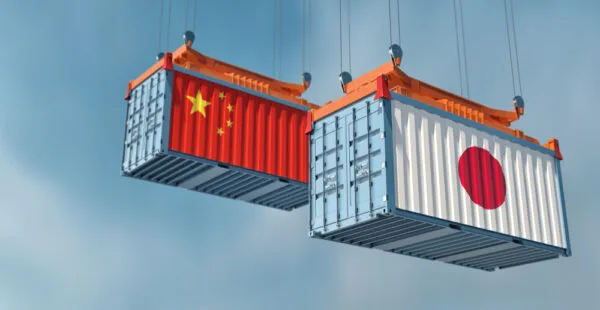
China has made a notable shift in its economic pressure strategy toward Japan, according to an analysis published by The Diplomat, a publication focused on Asia-Pacific affairs.
The assessment examines how Beijing has moved to deploy economic sanctions as a tool in its relations with Tokyo, marking what analysts describe as a change in the approach China has historically taken toward one of its largest trading partners.
A changing economic relationship
Japan and China share one of the world's most significant bilateral trade relationships, with deep supply chain integration across multiple industries. Any deliberate disruption to that relationship carries substantial consequences for both economies, making the reported strategy shift a development of considerable regional significance.
The use of economic sanctions as a coercive instrument has become more prominent in Chinese foreign policy in recent years. Beijing has previously employed trade restrictions and informal economic pressure against countries including Australia, South Korea, and Lithuania, often in response to political or security disagreements.
Context and implications
Relations between China and Japan have faced sustained strain over a range of issues, including territorial disputes in the East China Sea, Japan's growing defense cooperation with the United States, and Tokyo's participation in technology export restrictions targeting Chinese firms.
The Diplomat's assessment suggests that Beijing's current posture toward Japan represents a more structured and deliberate use of economic leverage, rather than ad hoc responses to individual incidents.
Analysts tracking the situation note that Japan's economic exposure to China - as both a major export market and a source of critical manufacturing inputs - gives Beijing meaningful leverage. At the same time, China's own reliance on Japanese technology and industrial components complicates any strategy of sustained economic pressure.
Broader regional significance
The reported shift comes at a moment of heightened strategic competition across the Indo-Pacific, with the United States, Japan, South Korea, and other partners deepening security and economic coordination in ways that Beijing has consistently criticized.
How Tokyo responds to any sustained economic pressure campaign will be closely watched by other regional governments assessing their own vulnerabilities to Chinese economic statecraft.
The full assessment is available through The Diplomat's coverage of Asia-Pacific security and economic affairs.