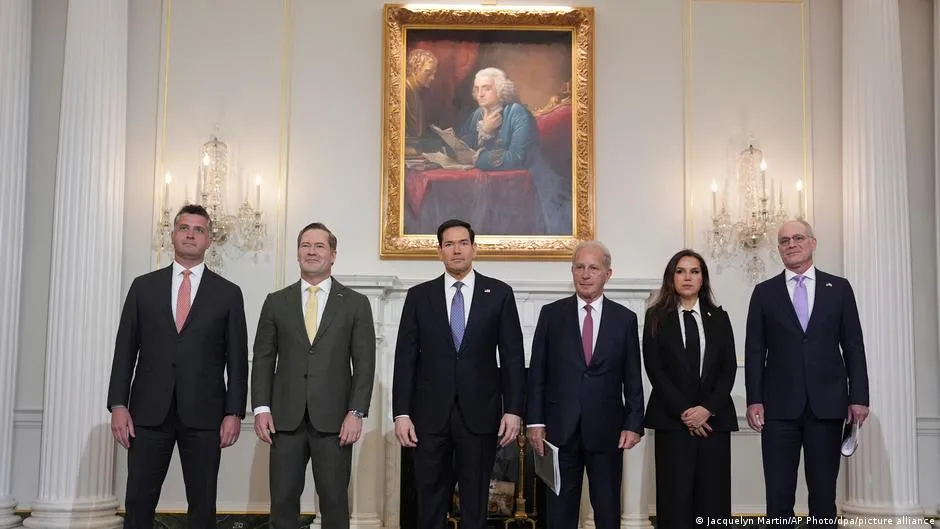
The European Union is exploring a deal that would grant United States authorities access to national databases across much of the bloc, according to reporting by Deutsche Welle. The arrangement is being considered as a concession to preserve visa-free travel for EU citizens visiting the United States.
Under the framework under discussion, US officials would gain the ability to search databases held by individual EU member states. The negotiations represent a significant potential shift in how European governments handle citizen data in relation to foreign law enforcement and security services.
The trade-off on the table
The core of the proposed arrangement centers on a reciprocal understanding: broader data access for American authorities in exchange for maintaining or expanding travel privileges for European passport holders. Visa-free entry to the United States is a priority for several EU governments, making the negotiations politically sensitive on both sides of the Atlantic.
The discussions come amid broader tensions over transatlantic data flows, an area that has long been contested between Washington and Brussels. European courts have previously struck down data-sharing arrangements with the United States over concerns that American surveillance laws do not provide sufficient protections for EU citizens.
Privacy and legal concerns
Any agreement would need to navigate the EU's stringent data protection laws, including the General Data Protection Regulation, which sets strict limits on how personal data can be transferred to third countries. Legal experts and privacy advocates are likely to scrutinize whether such a framework could withstand challenges before European courts.
The negotiations also raise questions about the sovereignty of individual member states, as national databases typically fall under domestic jurisdiction. It remains unclear which countries have signaled willingness to participate and whether any final arrangement would be binding across all 27 EU members or limited to a subset of the bloc.
Broader context
The talks reflect a pattern of the United States seeking enhanced security cooperation from European partners as a condition for favorable travel arrangements. Several EU member states have long sought full inclusion in the US Visa Waiver Program, which allows citizens to travel to America without obtaining a visa in advance.
Deutsche Welle reports that the EU is actively weighing the terms of such a framework, though no agreement has been reached. The outcome of the negotiations could set a significant precedent for how Europe balances citizen privacy against the diplomatic and economic benefits of frictionless transatlantic travel.