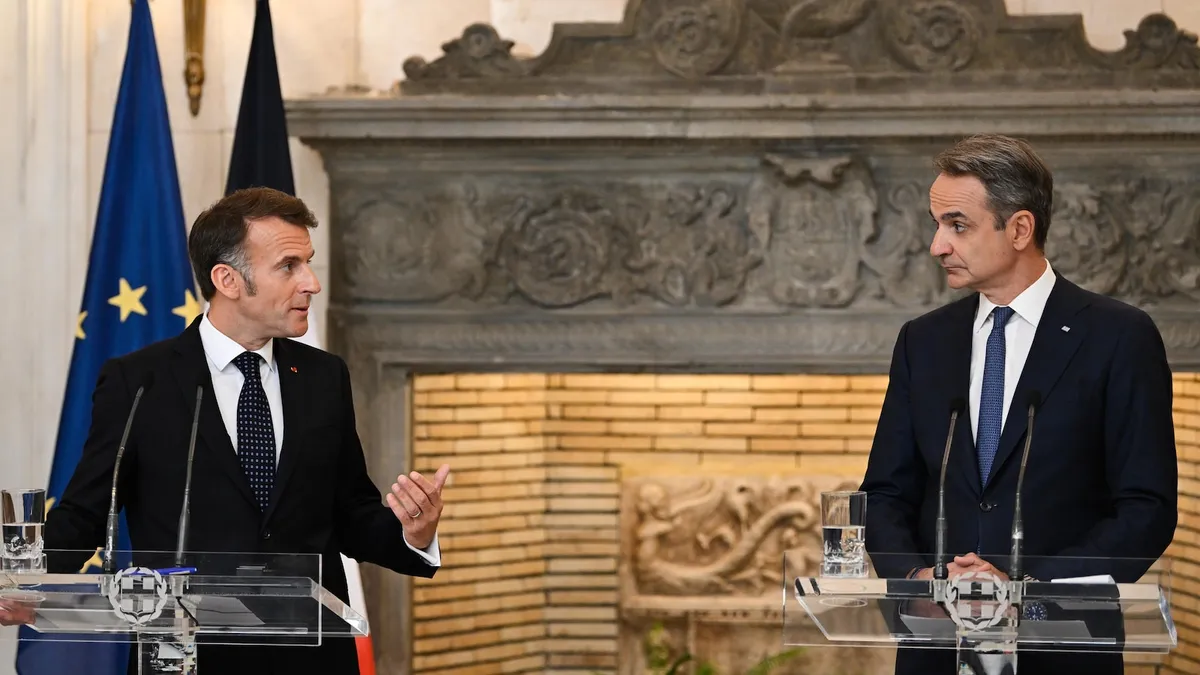
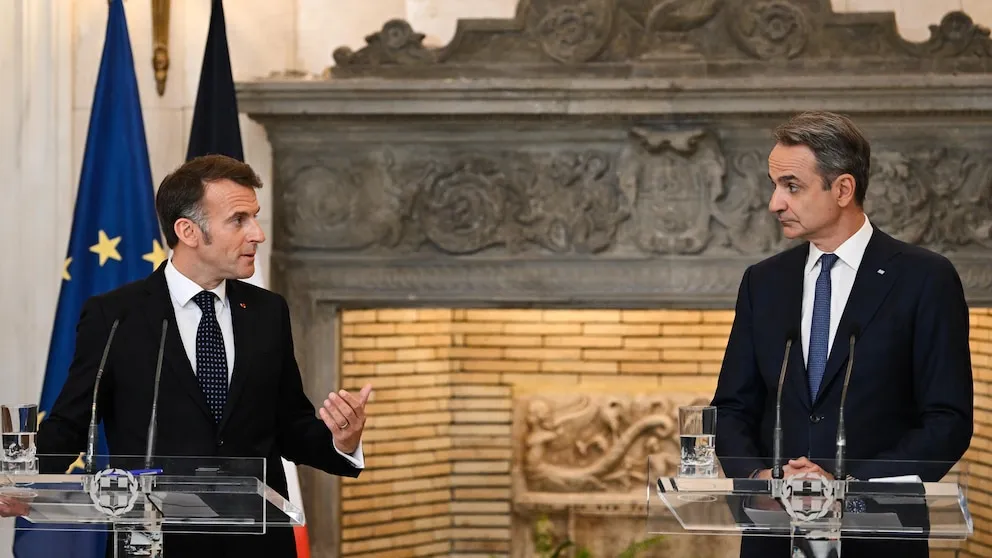
The leaders of France and Greece have moved to address concerns that the European Union's growing push to strengthen its own defense capabilities could undermine the NATO alliance, according to reporting by ABC News.
French President Emmanuel Macron stated that the EU's drive to bolster its collective military capacity is not designed to serve as an alternative to NATO, but rather to fulfill a longstanding American demand that European nations take greater responsibility for their own security.
The remarks come as the EU has significantly accelerated defense spending in recent months, prompted in part by uncertainty over the long-term commitment of the United States to European security and the ongoing war in Ukraine.
Responding to U.S. pressure
For years, successive U.S. administrations have pressed European allies to spend more on defense and reduce their reliance on American military guarantees. Macron's framing positions the EU's current spending surge as a direct answer to that call, rather than a move to sideline the transatlantic alliance.
Greek leadership echoed similar sentiments, reinforcing the message that enhanced European defense cooperation is meant to strengthen the overall Western security architecture, not fracture it.
Tensions within the alliance
The clarifications come at a delicate moment for transatlantic relations. Concerns have grown among some NATO members and U.S. officials that a more autonomous European defense posture could lead to duplication of resources, strategic divergence, or a weakening of the unified command structure that has underpinned Western security since the Cold War.
Proponents of deeper EU defense integration argue the opposite - that a more capable Europe reduces the burden on Washington and makes the alliance as a whole more resilient.
Broader context
The EU has introduced several initiatives in recent years aimed at pooling defense resources and increasing joint procurement among member states. These efforts gained urgency following Russia's full-scale invasion of Ukraine in 2022 and have accelerated further amid questions about the reliability of U.S. security commitments under shifting political conditions in Washington.
Both France and Greece are NATO members as well as EU member states, placing their leaders in a position to speak to the interests of both institutions simultaneously.
The statements from Paris and Athens reflect a broader effort by European governments to manage messaging around defense spending - reassuring Washington that increased European capability is an asset to NATO while also building domestic and continental support for higher military budgets.