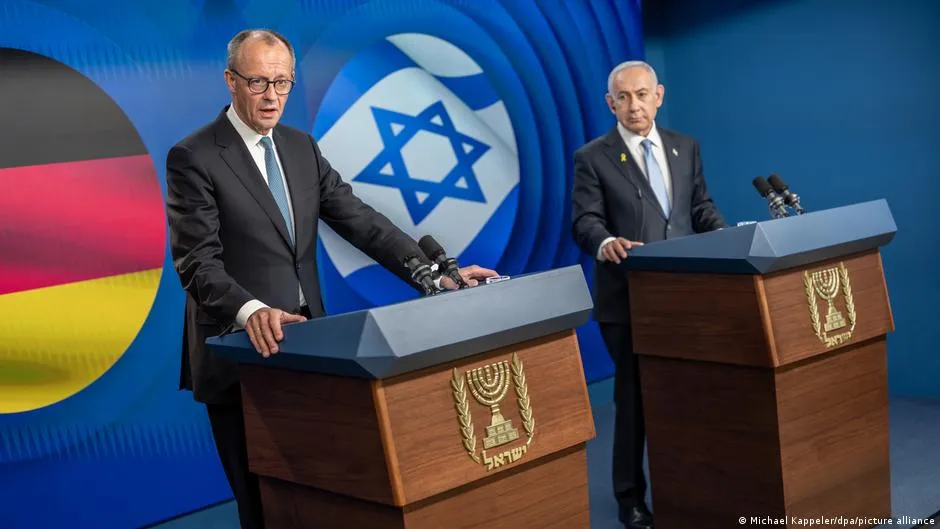
The relationship between Germany and Israel has entered a period of visible tension, with Israeli Finance Minister Bezalel Smotrich's pointed criticism of German Chancellor Friedrich Merz marking the latest episode in what analysts describe as a deepening estrangement between the two countries, according to a report by DW.
The dispute centers on Merz's remarks regarding Israeli settlement policy in the occupied West Bank. Smotrich responded with sharp criticism of the German chancellor's position, a striking public rebuke directed at the leader of a country long considered one of Israel's closest and most steadfast international partners.
A historically unique relationship under pressure
Germany's relationship with Israel has been shaped profoundly by the Holocaust, with successive German governments treating support for Israel's security as a matter of foundational national policy. That historical weight has traditionally insulated the bilateral relationship from the kind of friction common between other allied states.
However, that bond has faced growing strain in recent years. Germany's posture toward the conflict in Gaza, debates within the German government over arms exports to Israel, and differing assessments of Israeli military operations have all contributed to what observers are characterizing as a slow but significant divergence.
Settlement policy at the core of the dispute
Israeli settlement expansion in the West Bank remains one of the most contentious issues in the broader Israeli-Palestinian conflict. The settlements are considered illegal under international law by most countries and international bodies, a position Israel contests. Germany, aligned with the European Union's general stance, has been critical of continued settlement construction - a position that places Berlin at odds with the current Israeli government's policies.
Smotrich, a far-right minister and vocal advocate for settlement expansion, has been a polarizing figure in Israel's coalition government. His decision to publicly attack the German chancellor reflects not only personal ideological conviction but also the current Israeli government's willingness to confront even traditionally friendly European partners when it comes to criticism of its policies.
Broader implications for European-Israeli ties
Germany's shifting tone is not occurring in isolation. Several European governments have moved toward stronger criticism of Israeli actions in Gaza and the West Bank, with some recognizing Palestinian statehood and others moving to impose sanctions. Germany has been more cautious than some of its EU partners, but the gap between Berlin and Jerusalem appears to be widening nonetheless.
DW's report frames the Smotrich-Merz episode as symptomatic of a broader realignment rather than an isolated dispute, suggesting that the once-near-unconditional nature of German support for Israel is giving way to a more conditional and contested relationship.