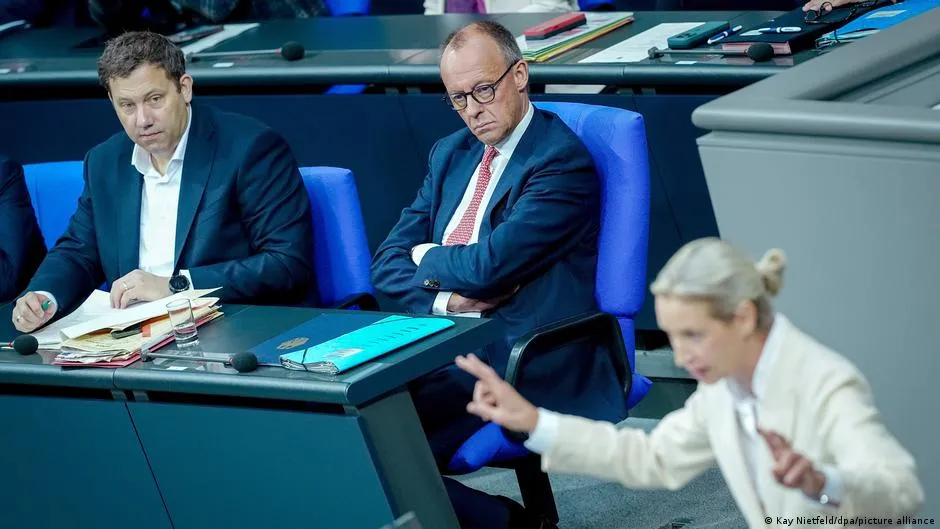
Friedrich Merz has been chancellor of Germany for less than a year, and he has already achieved something remarkable - just not the kind of remarkable anyone was hoping for. According to reporting by DW, his government has become the most unpopular newly-formed German administration ever recorded. Congratulations, we guess.
A record nobody wanted
German voters, never known for their excessive cheerfulness, appear to be particularly sour on this one. No previous German government has polled this badly at such an early stage, which is a genuinely stunning milestone given Germany's long postwar history of coalition politics, compromise, and mild-mannered disappointment.
Merz came in promising fiscal discipline, migration crackdowns, and a general vibe of grown-up governance after the collapse of the previous traffic-light coalition. But the honeymoon - if there ever was one - appears to have been brutally short.
Who benefits? (You already know the answer)
The far-right Alternative for Germany party, better known as the AfD, is reportedly capitalising hard on this widespread discontent, per DW's analysis. This is, unfortunately, a very predictable outcome. When mainstream parties stumble, voters looking for someone to blame tend to find the loudest voice in the room - and the AfD has never exactly been shy.
The AfD has spent years positioning itself as the permanent protest option for dissatisfied Germans across the political spectrum, and a historically unpopular centrist government is basically their ideal recruiting environment.
Why is Merz so unpopular so fast?
DW's reporting points to broad discontent with the government's direction, though Germany is also navigating genuine headwinds - a sluggish economy, ongoing debates over migration policy, and a European security environment that has become considerably more complicated since 2022. None of these are easy problems, and none of them make for happy voters.
The challenge for Merz is that dissatisfaction this early in a term is hard to shake. First impressions in politics tend to stick, and right now, voters appear to have formed a pretty firm one.
What happens next?
Germany does not face a federal election in the immediate term, so Merz has time to turn things around - but history suggests that governments this unpopular this early rarely manage a dramatic comeback. The AfD, meanwhile, will almost certainly keep doing what it does best: being loudly unhappy about everything, and watching the poll numbers climb.
For a country that prides itself on stability and Ordnung, this is shaping up to be a genuinely turbulent political chapter.