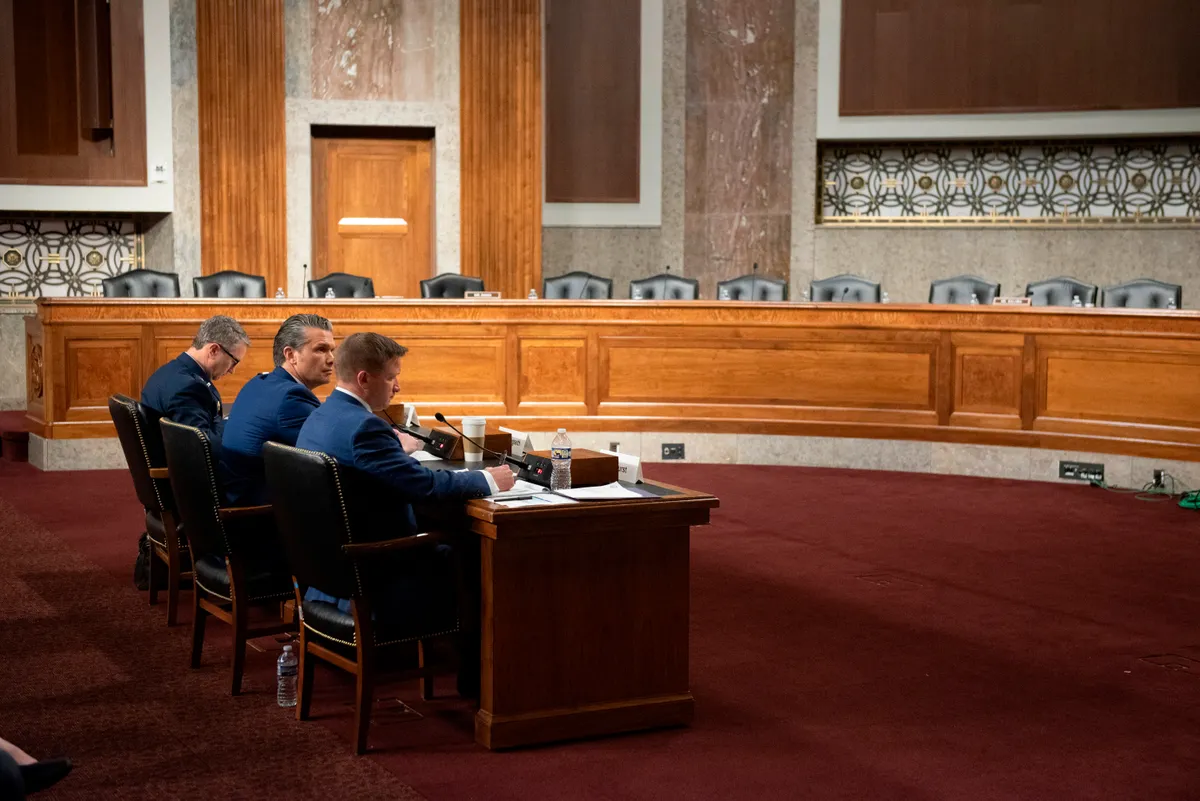
In a move that will surprise absolutely nobody, Republican lawmakers have decided that the best course of action regarding the fragile U.S.-Iran ceasefire is to... let Donald Trump handle it. All of it. Good luck, champ.
According to reporting by NPR, GOP members of Congress say they will continue deferring to President Trump as a critical deadline looms over the shaky truce with Iran. The ceasefire, described as fragile - which is Washington-speak for 'one tweet away from chaos' - has put lawmakers in the uncomfortable position of having to either assert their constitutional war powers or, alternatively, go touch some grass and pretend it's someone else's problem.
They chose the grass.
Congress's constitutional moment, starring a dramatic pause
The U.S. Constitution hands Congress the formal authority to declare war, a clause that has historically been treated by modern legislators with the same energy as the terms and conditions on a software update - technically important, routinely ignored. Republican lawmakers appear content to maintain that proud tradition, at least for now.
The phrase 'for now' is doing a lot of heavy lifting in those senators' statements. It implies a kind of principled restraint - as if they are carefully monitoring the situation and could, at any moment, spring into legislative action. It also implies the opposite of that.
A fragile ceasefire on the clock
The ceasefire with Iran represents one of the most high-stakes diplomatic situations of Trump's second term. Iran's nuclear ambitions, regional proxy networks, and the general vibes of the Middle East make this a situation where miscalculation could escalate fast. NPR's reporting highlights that a deadline has arrived, adding urgency to what is already a white-knuckle diplomatic arrangement.
To be fair to the Republicans, there is a reasonable argument that publicly second-guessing a president during active negotiations with a geopolitical adversary is not exactly a power move. Undermining a sitting president's diplomatic leverage while the ink is barely dry on a ceasefire has historically produced bad results regardless of party.
Still, the optics of an entire branch of government essentially filing a collective 'not my department' on war and peace is, let's say, a lot.
What happens next
All eyes remain on the Trump administration as the deadline pressure mounts. Whether the ceasefire holds, collapses, or somehow transforms into a full diplomatic agreement remains to be seen. Meanwhile, Congress will be watching closely - from a safe distance, with plausible deniability firmly in hand.
Sources: NPR