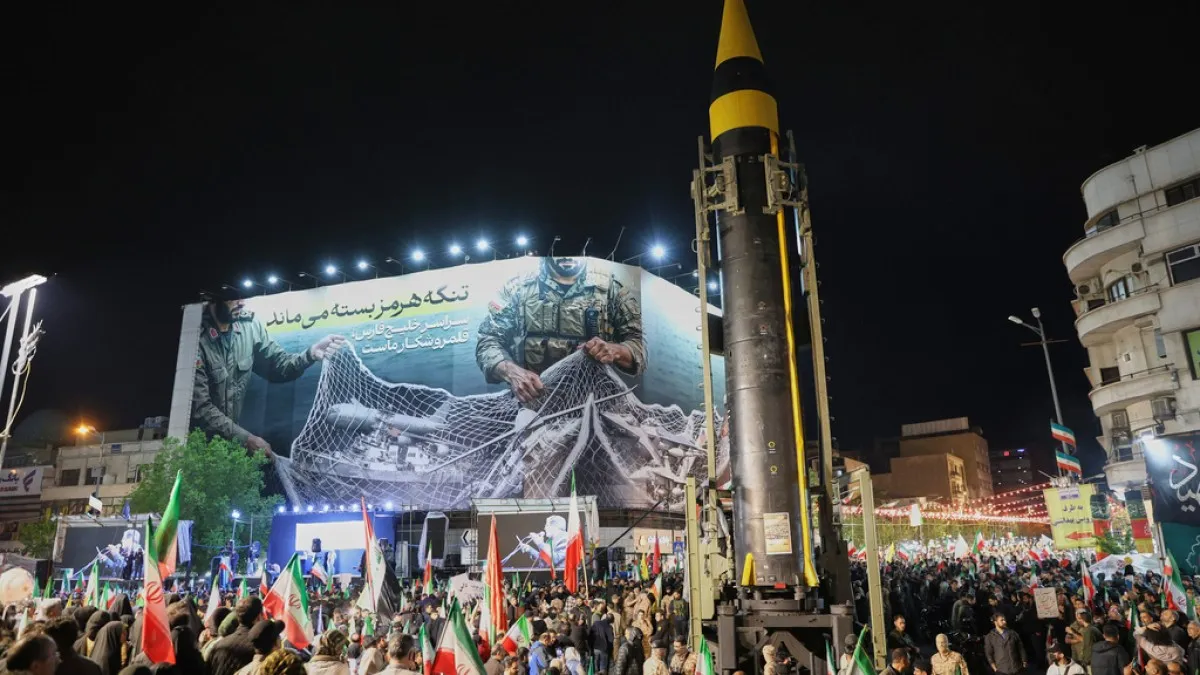
Iran's Parliament Speaker Mohammad Bagher Ghalibaf has blamed a U.S. blockade for the current deadlock in nuclear negotiations, warning that neither Washington nor Israel will achieve their objectives through coercive tactics, according to a report by Al Jazeera published Tuesday.
Ghalibaf's remarks came as a fragile truce between Iran and its adversaries continued to hold, though the diplomatic situation remained tense. The speaker's comments reflect Tehran's position that external pressure is the primary obstacle to progress in talks, rather than Iranian policy itself.
Stalled negotiations
The Iranian official's statement signals continued frustration within Tehran over what it characterizes as American obstruction of diplomatic channels. Iran has consistently argued that sanctions and other punitive measures imposed by the Trump administration have made meaningful negotiations difficult to pursue.
Ghalibaf, one of Iran's senior legislative figures, framed the standoff in terms of sovereignty and resistance, suggesting that Iran would not yield to what he described as bullying tactics from the United States and Israel. He did not, according to the Al Jazeera report, offer specific proposals for breaking the impasse.
Fragile calm
Despite the heated rhetoric from Iranian officials, a ceasefire arrangement appears to be holding in the region, at least in the short term. The durability of that truce remains uncertain given the ongoing tensions and absence of substantive diplomatic progress.
The situation reflects a broader pattern that has defined U.S.-Iran relations under the Trump administration, which has favored a maximum pressure strategy involving extensive sanctions targeting Iran's economy and energy sector. Iran has repeatedly rejected what it views as preconditions attached to any potential negotiations.
Regional implications
The diplomatic stalemate carries significant implications for the wider Middle East. Iran's nuclear program remains a central concern for Western governments and regional neighbors, particularly Israel, which has not ruled out military action to prevent Tehran from acquiring nuclear weapons capability.
International observers have noted that each side appears to be waiting for the other to make the first substantive concession, a dynamic that has prolonged uncertainty and raised the risk of miscalculation.
No timeline for resumed talks has been announced by either party, and it remains unclear what conditions, if any, could bring both sides back to the negotiating table in the near term.