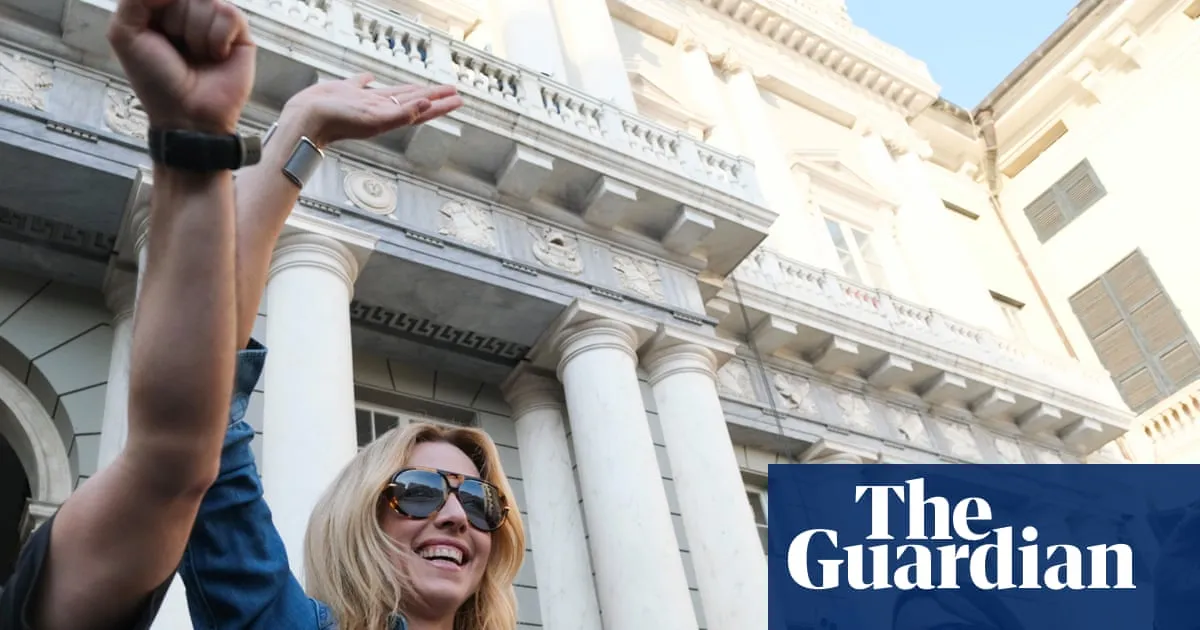
Italy's political landscape has shifted notably in recent weeks, with Prime Minister Giorgia Meloni facing a string of setbacks that have prompted observers to look for emerging challengers on the left. Among those drawing attention is Silvia Salis, the newly elected left-wing mayor of Genoa and former Olympic athlete, who is being described by supporters as a potential unifying figure for the fragmented Italian opposition.
According to reporting by The Guardian, Meloni's recent difficulties began with a failed referendum on judicial reform, which punctured her reputation for political dominance. The defeat was followed by government resignations and left the prime minister working to reassert her authority.
Adding to her difficulties, Meloni's relationship with U.S. President Donald Trump - once considered a key diplomatic asset - has reportedly soured. Trump publicly criticized the Italian leader this week, a notable development given how closely Meloni had aligned herself with the American president since his return to the White House.

A new face on the left
Against this backdrop, Salis has emerged as a figure generating genuine enthusiasm within progressive circles. The Guardian described her as being seen by supporters as "a breath of fresh air" - a politician capable of bridging ideological divides within Italy's historically fractured centre-left.
Salis's background sets her apart from the traditional mold of Italian opposition politicians. A former competitive athlete who represented Italy at the Olympic Games, she brings a public profile that extends beyond conventional party politics. Her election as mayor of Genoa, a major port city and historical centre of Italian left-wing politics, provided her with an institutional platform from which to build a broader national presence.
Italy's opposition parties have long struggled to present a coherent front against Meloni's Brothers of Italy-led coalition. The prospect of a figure capable of drawing together competing progressive factions has therefore attracted considerable interest among those seeking an alternative to the current government.

Context for Meloni's difficulties
The judicial reform referendum represented one of the more significant domestic policy setbacks of Meloni's tenure. Referendums in Italy require a quorum of 50 percent of eligible voters to be valid, a threshold that has historically proven difficult to meet, and the result was widely interpreted as a blow to the government's reform agenda.
Whether Meloni's current difficulties represent a temporary rough patch or a more fundamental weakening of her political position remains to be seen. Her party has maintained strong polling numbers since coming to power in 2022, and Italian parliamentary elections are not scheduled until 2027.
For now, the attention surrounding Salis reflects a broader search within Italian progressive politics for leadership capable of mounting a credible challenge when that election arrives.