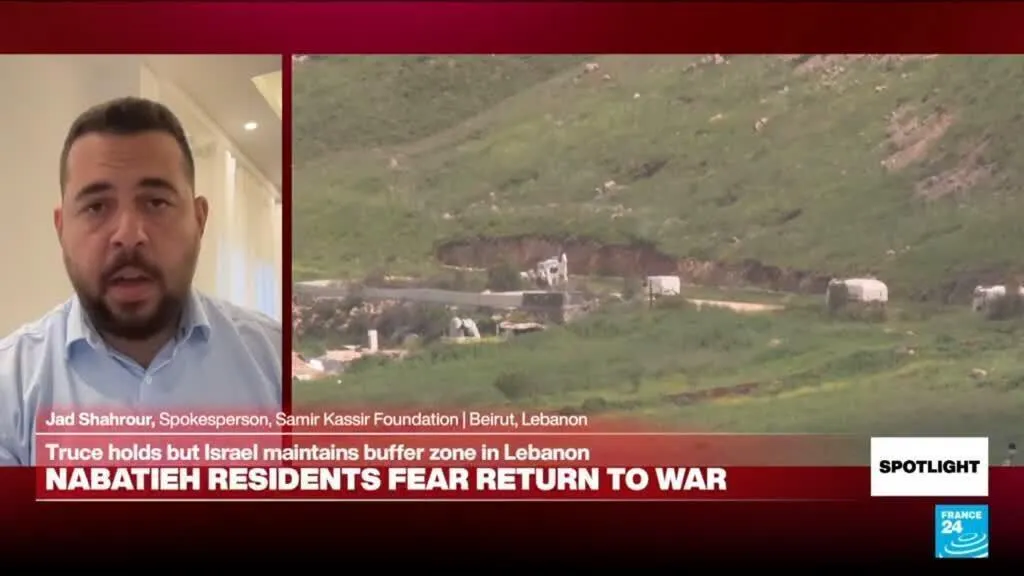
Lebanon is working to establish an independent negotiating position with Israel, distancing itself from external actors - including Iran - that have historically shaped the country's foreign policy decisions, according to a Lebanese civil society analyst speaking to France 24.
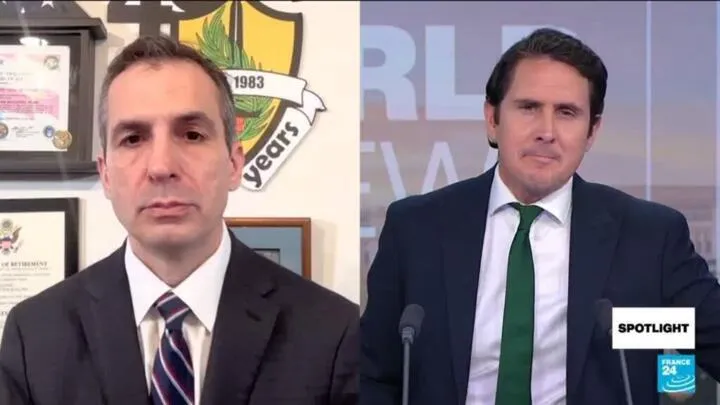
Jad Shahrour, Communications Manager at the Samir Kassir Foundation in Beirut, told the France 24 program Spotlight that Lebanon faces a defining geopolitical moment in which sovereignty, regional rivalries, and international diplomacy are all converging at once.
"We cannot let Iran be our spokesperson," Shahrour said, framing the current negotiations with Israel as part of a broader effort to reclaim the authority of the Lebanese state over its own national decisions.
Shahrour emphasized the importance of disentangling Lebanon's decision-making processes from foreign powers, a challenge that has long defined the country's political landscape. Hezbollah, the Iran-backed armed group and political party, has historically acted as a parallel power center in Lebanon, complicating efforts by the central government to speak with a unified voice on security and foreign affairs.
A state reasserting itself
The push for Lebanese autonomy in negotiations comes amid ongoing uncertainty in the country following the conflict that erupted along the Israel-Lebanon border. The Lebanese government has sought to position itself as the primary interlocutor in any diplomatic process, rather than allowing armed factions to define the terms of engagement.
Shahrour described the current moment as a crossroads, suggesting that Lebanon's ability to assert its own interests - separate from those of regional sponsors - would have long-term consequences for the strength and legitimacy of the Lebanese state.
The negotiations with Israel take place against a backdrop of deep economic hardship and political fragmentation in Lebanon. The country has struggled to rebuild central state institutions following years of political paralysis, the 2020 Beirut port explosion, and successive economic crises.
Regional context
The broader regional picture remains complex. Iran's influence across Lebanon, Syria, Iraq, and Yemen has been a persistent concern for Western governments and Gulf states alike. Any effort by Beirut to conduct diplomacy independently of Tehran would represent a significant shift in the region's political dynamics.
Shahrour acknowledged the difficulties of navigating this terrain while still recognizing the role various actors play in Lebanese politics, according to France 24's reporting.
The interview was conducted as part of France 24's ongoing coverage of Lebanon's position within the evolving Middle East security landscape.