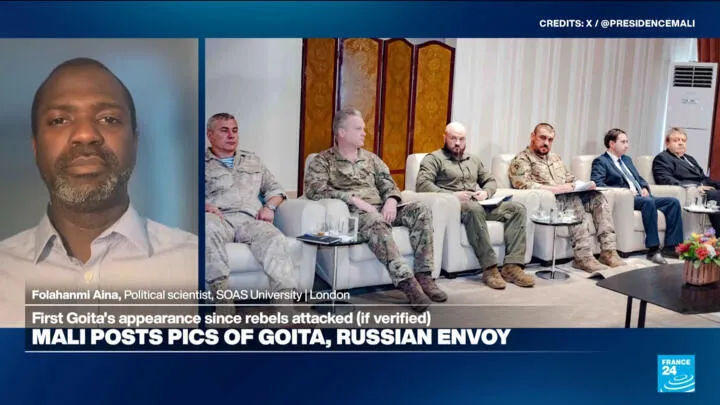
If there were a prize for 'most awkward geopolitical bromance currently on fire,' Mali's military junta and its Russian mercenary backers would be collecting the trophy right now - and not in a good way.
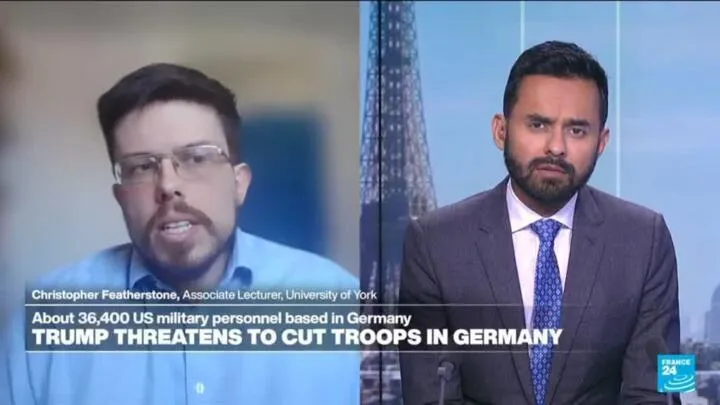
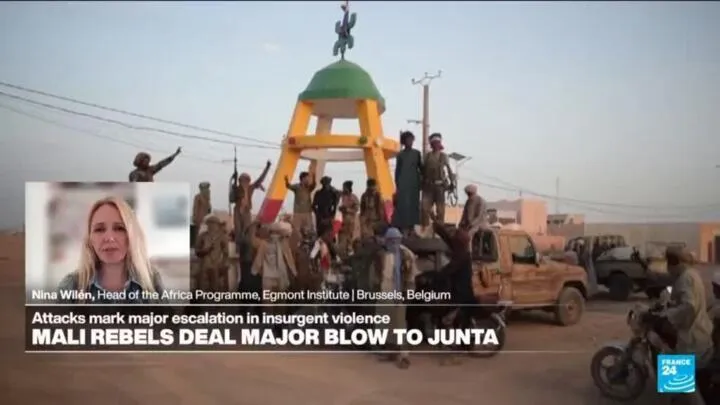
According to Ulf Laessing, Director of the Regional Sahel Programme at the Konrad Adenauer Foundation, speaking to France 24, both the Malian junta and Russia's Wagner group (now rebranded but equally chaotic) are firmly in what he calls 'damage control mode' following a series of significant attacks that have rattled confidence in the whole arrangement.
When your hired muscle looks soft
The core problem, as Laessing bluntly frames it, is credibility. The junta came to power promising it would do what elected governments could not - actually secure the country. It then outsourced a big chunk of that job to Russian mercenaries, who were supposed to be the big, scary, no-nonsense solution that Western partners apparently were not. Now, with attacks continuing and governance looking shaky, Russia reportedly needs to prove it is 'actually of any use.' Ouch.
For the junta, the optics are equally painful. Projecting control is basically the entire point of a military government, and struggling to do so while leaning on an increasingly compromised external partner is not a great look. Laessing describes the situation as a broader crisis of governance - not just a security blip, but a structural problem with how power is being exercised (or not exercised) in Bamako.
Strange bedfellows in the desert
Making the security picture even messier is the alliance between Tuareg separatist groups and jihadist forces operating in the region. Laessing is careful to characterize this as purely 'tactical' - meaning these groups are not ideological soulmates holding hands around a campfire. They have separate goals and will likely turn on each other eventually. But right now, that tactical cooperation is enough to create serious headaches for both the junta and its Russian partners.
The Sahel has long been a graveyard for confident predictions and expensive security strategies. France tried for years and eventually got shown the door. Western partners were pushed out in favor of the Russian option, which was sold as tougher, cheaper, and less preachy about human rights. The current crisis puts that entire narrative under pressure.
Reputation, meet desert sand
Both parties have staked something real on this partnership working. The junta staked its political legitimacy. Russia staked its reputation as a credible security provider in Africa - a continent it has been courting aggressively. If neither can stabilize Mali, the whole model starts looking a lot less attractive to other potential customers on the continent.
As Laessing's assessment makes clear, the balance of embarrassment right now is perfectly distributed. Everyone involved looks bad, and the people of Mali are still caught in the middle of it all.