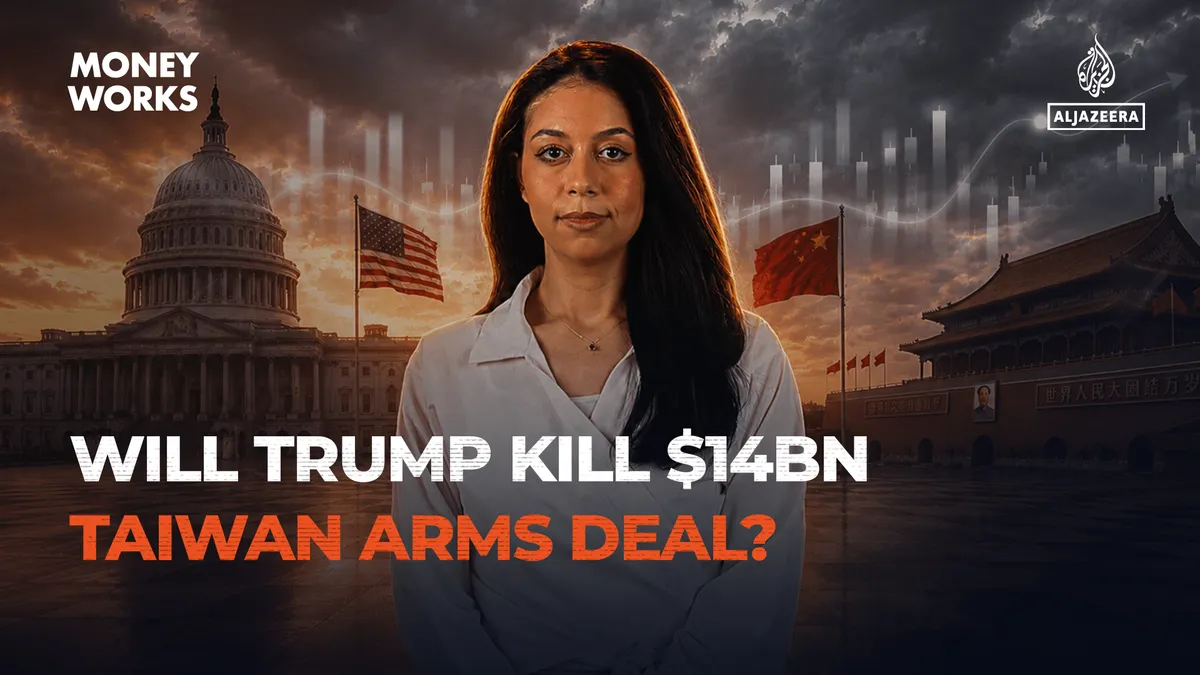
A $14 billion arms deal between the United States and Taiwan is now dangling by a thread, and the big question swirling around Washington and Taipei is simple: will Donald Trump pull the plug?
According to reporting by Al Jazeera's Money Works, the fate of one of the largest weapons packages ever assembled for Taiwan is increasingly uncertain under the current Trump administration. The deal, which was originally approved under Biden, was meant to significantly bolster Taiwan's defense capabilities against the ever-looming threat from mainland China.

So what's actually in this deal?
The package is not exactly a gift basket. It includes advanced military hardware designed to help Taiwan defend itself in the event of a Chinese military move - the kind of scenario that defense analysts have been nervously war-gaming for years. At $14 billion, it is one of the most substantial arms commitments the U.S. has ever offered to the island.
Why might Trump kill it?
Here is where it gets geopolitically spicy. Trump has shown a pattern of using arms deals and diplomatic gestures as leverage in broader negotiations - and his relationship with Beijing has always been... complicated. Critics and analysts worry that Taiwan's security package could get quietly sacrificed on the altar of a U.S.-China trade deal or some other backroom arrangement.
Trump's transactional approach to foreign policy means that almost nothing is off the table when there's a deal to be made elsewhere. Taiwan, despite being a crucial democratic partner in the Indo-Pacific, has historically found itself in the uncomfortable position of being a bargaining chip rather than a beneficiary in U.S.-China negotiations.
Taiwan is understandably nervous
Taipei has been watching the situation closely. Taiwan's government has invested enormous political and financial capital into securing U.S. military support, particularly as China's military posture has grown more assertive in recent years. Losing or even delaying this deal would send a chilling message - not just to Taiwan, but to every U.S. ally in the region wondering how reliable American security commitments actually are.
Al Jazeera notes that the situation remains unresolved, with no official confirmation from the Trump administration about the deal's status. That silence, analysts suggest, may itself be part of the message.
Whether Trump ultimately follows through, renegotiates the terms, or tosses the whole thing to score points with Beijing remains to be seen. But for Taiwan, a $14 billion question mark hanging over their national security is about as comfortable as it sounds.