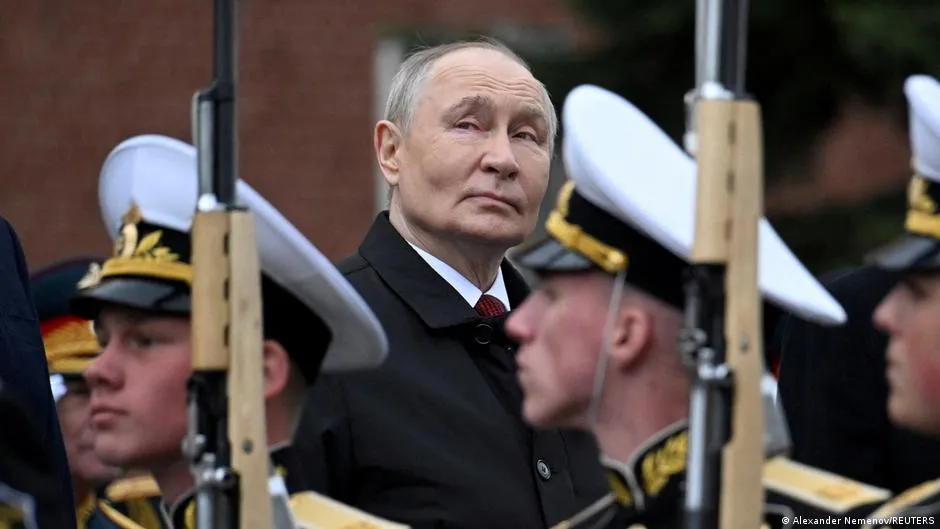
Russian President Vladimir Putin has said he believes the war in Ukraine is approaching its conclusion, according to reporting by Deutsche Welle. The comments came as both Russia and Ukraine observed a three-day ceasefire in a conflict that has now stretched into its fourth year.
Putin's remarks represent one of the most direct signals from Moscow that the Kremlin sees an endpoint to the war, though the Russian president did not specify what conditions he believed would define that conclusion or when it might occur.
The temporary ceasefire, in place as Putin made his statement, marks a rare pause in hostilities between the two nations. Ceasefires in the conflict have historically been fragile, with both sides trading accusations of violations shortly after such pauses have begun.
A war entering its fourth year
The conflict began with Russia's full-scale invasion of Ukraine in February 2022, following years of lower-level fighting in eastern Ukraine that started in 2014. Since then, the war has resulted in tens of thousands of military casualties on both sides and significant civilian losses, along with the displacement of millions of Ukrainians.
International diplomatic efforts to bring the parties to the negotiating table have intensified in recent months, with the United States under President Donald Trump pushing for a negotiated settlement. Trump has repeatedly expressed a desire to end the war quickly, and his administration has engaged with both Kyiv and Moscow in an effort to broker talks.
Uncertainty over terms
The core obstacle to any peace agreement remains the fundamental disagreement over territorial and security arrangements. Ukraine insists on the restoration of its internationally recognized borders, including territory currently occupied by Russian forces. Russia, for its part, has claimed annexation of four Ukrainian regions - Donetsk, Luhansk, Zaporizhzhia, and Kherson - none of which it fully controls on the ground.
Western governments and Ukraine's allies have urged caution about any settlement that would reward Russia's territorial gains through military force, arguing such an outcome could set a dangerous precedent for international law and future conflicts.
Whether Putin's remarks signal a genuine shift in Moscow's strategic posture or represent a diplomatic maneuver remains unclear. Ukrainian officials have consistently expressed skepticism about Russian statements regarding peace, citing what they describe as a pattern of bad-faith negotiations throughout the conflict.
The three-day ceasefire's durability and what, if anything, it leads to in terms of broader negotiations will be closely watched by governments and analysts across Europe and beyond.