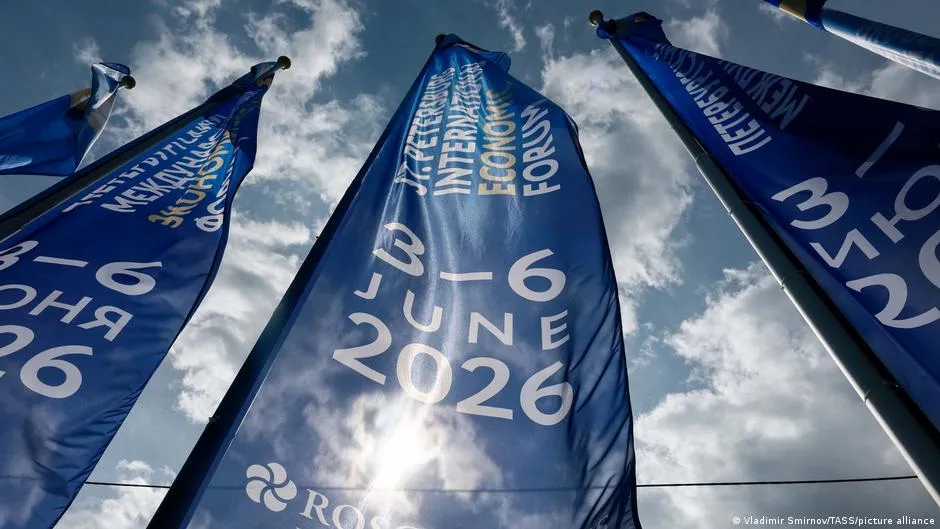
Every year, Russia rolls out the red carpet for its St. Petersburg International Economic Forum (SPIEF), the Kremlin's premier "look how not-isolated we are" event. And this year, Russian officials and state media are excitedly claiming that German businesses are trickling back to the party - despite the whole ongoing war in Ukraine thing. There's just one small problem: the guest list tells a messier story.
The claim vs. the reality
According to a report by Deutsche Welle, Russian state media and officials have been loudly trumpeting German participation at SPIEF 2025 as evidence that Western business is warming back up to Moscow. It's a narrative the Kremlin has been very eager to push - because nothing says "sanctions aren't working" like a photo op with a European suit.
But when journalists actually looked at who was attending, the picture was far less dramatic than advertised. Rather than major German corporations sending senior executives back to St. Petersburg, the attendees appear to largely consist of smaller firms, intermediaries, and individuals operating in murkier corners of the business world - not exactly the blue-chip return that headlines were implying.
Why it matters
The optics game here is real and high-stakes. Russia has faced significant economic isolation since its full-scale invasion of Ukraine in February 2022. Major German industrial giants - the kinds of companies that once made SPIEF a legitimately prestigious event - largely pulled out and have not returned. The German government has made clear it does not encourage businesses to re-engage with Russia under current circumstances.
Using vague or exaggerated claims of "German participation" to signal normalcy is a well-documented part of Russia's broader information strategy, aimed both at domestic audiences and at wavering countries watching from the sidelines.
Reading the room
SPIEF has always been a bit of a geopolitical thermometer. In its heyday, it attracted genuine heavyweights from Western finance and industry. Today, the forum still draws participants - but the composition has shifted heavily toward delegations from the Global South, China, and figures from countries that have maintained neutral or friendly stances toward Moscow.
The presence of a handful of German-linked attendees - whoever they actually are - does not signal a business exodus in reverse. It signals that in a world of 8 billion people and complex supply chains, you can always find someone willing to show up somewhere, especially if the Kremlin is footing part of the bill.
Deutsche Welle's reporting is well worth a read for anyone trying to separate the signal from the noise on this one.