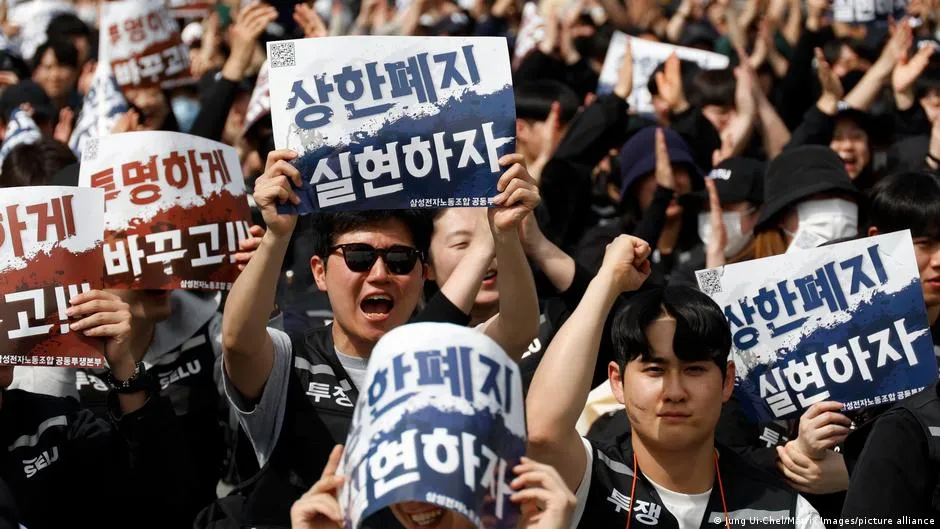
Union workers at Samsung Electronics have staged rallies and are threatening a weeks-long strike if the company does not meet their demands for a greater share of profits generated by the booming artificial intelligence industry, according to reporting by DW.
The labor action comes as Samsung has seen significant revenue gains tied to surging global demand for memory chips used in AI hardware. Workers argue that those gains have not been adequately reflected in their wages and benefits.
What workers are demanding
Union representatives have called for improved compensation packages, framing their demands around what they describe as an unequal distribution of profits at a time when the AI sector is driving record revenues for chipmakers. Specific figures for proposed wage increases were not immediately confirmed in the available reporting.
Samsung's workforce unions have warned that if negotiations with management fail to produce a satisfactory outcome, they are prepared to initiate a sustained work stoppage lasting several weeks.
Potential impact on global chip supply
Samsung is one of the world's largest producers of memory chips, including DRAM and NAND flash storage components that are critical to data centers, consumer electronics, and AI infrastructure. A prolonged production halt at its South Korean facilities could create disruptions across global semiconductor supply chains, affecting manufacturers and technology companies worldwide.
The threat arrives at a particularly sensitive moment for the chip industry, which is still navigating supply chain pressures and elevated demand from AI hardware developers. Memory chips have become a central component in the build-out of large-scale AI systems, making Samsung's production capacity a strategically important factor for technology companies globally.
Context
Labor disputes at major technology manufacturers have grown more prominent in recent years as workers at high-revenue firms push for compensation aligned with corporate earnings. Samsung's unions have previously organized strikes, but a multi-week walkout would represent a significant escalation.
Management at Samsung had not issued a detailed public response to the latest demands at the time of reporting, according to DW. Negotiations between union representatives and company officials are expected to continue in the coming days.
The outcome of those talks will be closely watched by the broader semiconductor industry, given Samsung's central role in global chip production and the potential downstream consequences of any major supply disruption.