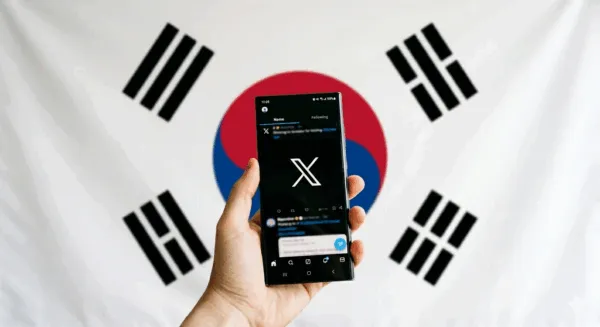
In what may be the fastest any world leader has ever turned a congratulatory social media post into an international incident, South Korea's Lee Jae-myung has managed to kick off a diplomatic controversy with his very first foray into digital statecraft - before he's even properly warmed the presidential seat.
According to The Diplomat, Lee's post on X (the platform formerly known as Twitter, formerly known as something people used without embarrassment) marked what was supposed to be a promising new chapter for South Korean digital diplomacy. Instead, it immediately sparked a diplomatic row - the kind of row that requires stern phone calls between officials who probably would have preferred a quiet Tuesday.
What exactly went wrong?
The details of the specific controversy are still developing, but the broader pattern here is as old as the internet itself: a message carefully crafted for one audience lands very differently with another. The problem with diplomacy conducted over social media is that it is, by definition, public. Every word is simultaneously a communique to foreign governments, a statement to domestic voters, and content for the global comment section - three audiences with radically different expectations and exactly zero patience for nuance.
Traditional diplomacy evolved over centuries precisely because getting the phrasing right between nations is genuinely difficult. Bilateral communiques go through layers of review for a reason. X does not have layers of review. X has a 280-character limit and a reply section full of people who are angry about something.
The broader stakes
South Korea is in a particularly delicate diplomatic position - navigating relationships with the United States, China, Japan, and North Korea simultaneously, all of which require careful calibration. Introducing the chaos variable of real-time social media posting into that equation is a bold choice, to put it generously.
The Diplomat notes that Lee's post was intended to signal a new beginning. And in fairness, it did signal something new - just not quite what was planned.
World leaders have had a complicated relationship with posting. Some have used social media effectively to project strength and relatability. Others have started trade wars at 3am. The jury remains very much out on whether the medium is compatible with the measured, strategic communication that international relations actually requires.
For now, South Korea's diplomatic corps is presumably doing what diplomatic corps do after a social media incident: drafting careful clarifications, making reassuring phone calls, and quietly hoping nobody screenshots anything else.