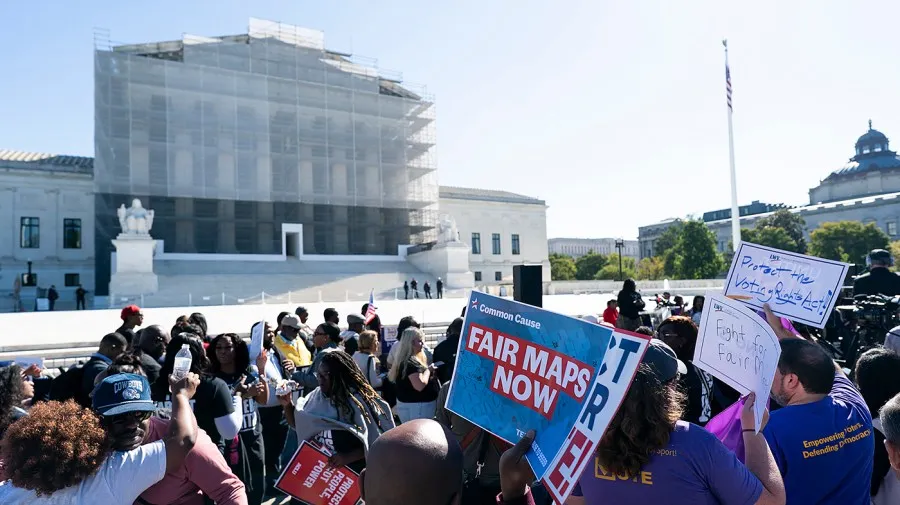
The U.S. Supreme Court has struck down Louisiana's congressional map, and the fallout has sparked a furious debate that goes well beyond the bayou state - because nobody, apparently not even the justices themselves, can agree on exactly how badly the 1965 Voting Rights Act just got kneecapped.
According to reporting by The Hill, the conservative majority on the court is framing their decision as more of a software update than a system wipe. Just a tweak, they say. A modest recalibration of how the landmark civil rights law is interpreted and applied. Nothing to see here, folks.
The liberal dissenters are not buying it for a single second.
The progressive wing of the court has characterised the ruling as nothing short of dismantling the core protections of the Voting Rights Act - a law that generations of civil rights activists literally bled and died to secure back in 1965.
So who's right? Well, that's the fun part - legal scholars and voting rights advocates are now scrambling to figure out just how far the ruling actually reaches. The Hill reports the decision has triggered a "swirling debate" across the legal landscape, with experts deeply divided on its real-world implications.
Why Louisiana specifically?
Louisiana's congressional map had been at the center of ongoing legal battles over whether Black voters were being adequately represented under the Voting Rights Act's Section 2, which prohibits voting practices that discriminate based on race. The Supreme Court's invalidation of the map now sets a new precedent - though just how sweeping that precedent is remains the million-dollar (and frankly, the democracy-defining) question.
The bigger picture
This isn't just a Louisiana problem. If the liberal dissenters are anywhere close to correct, the ruling could fundamentally reshape how minority voting rights are protected across every state in the union. Redistricting fights in Georgia, Texas, and elsewhere could look very different under a weakened VRA framework.
If the conservative majority's "just a small update" reading holds, the practical changes may be more limited - though voting rights groups are understandably skeptical of that optimistic interpretation given the current court's track record on electoral issues.
The VRA has already taken significant hits in recent years, most notably in the 2013 Shelby County v. Holder decision that gutted the law's preclearance requirements. Whether this latest ruling is a finishing blow or just another chip out of the foundation depends entirely on who you ask - and apparently, that includes the justices who actually wrote the opinions.
As reported by The Hill, the debate is ongoing and far from settled.