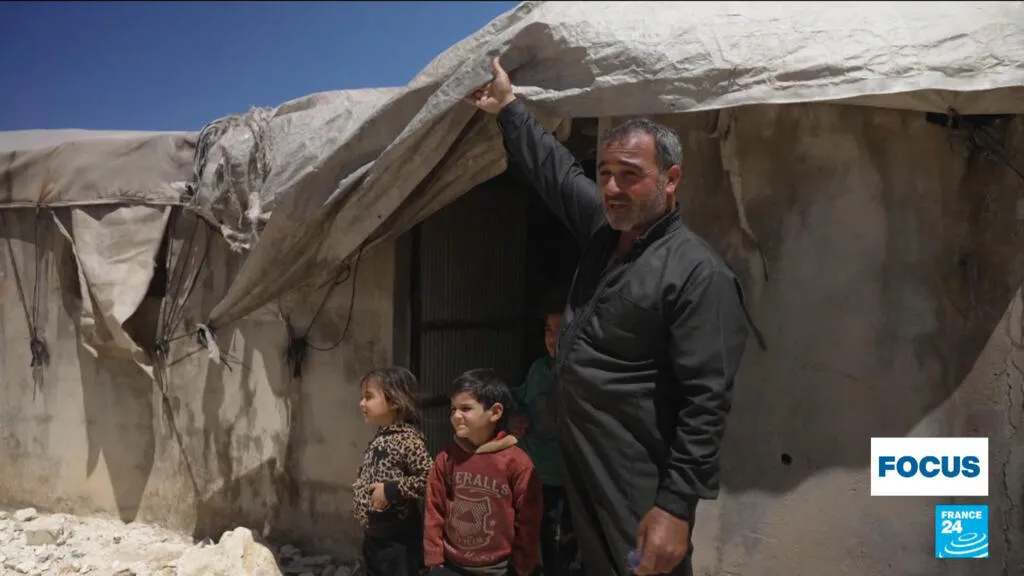
When Bashar al-Assad's regime finally collapsed, millions of Syrians dared to dream of something radical: going home. Unfortunately, home - for a huge chunk of them - no longer really exists in any meaningful, liveable sense.
According to a France 24 report, the northwest of Syria is currently home to hundreds of thousands of displaced people still crammed into makeshift shelters, staring at the wreckage of their former villages and doing the math on how long reconstruction might actually take. Spoiler: it's years. Many years.
The cruel joke of liberation
The fall of Assad was supposed to be the turning point. And in a political sense, it was. But politics doesn't rebuild a roof or reconnect a water pipe. When displaced families made the journey back to their home villages, many found destruction so severe that returning permanently simply wasn't viable. So back to the camps they went, in what has become one of the cruellest loops of the post-war transition - liberated in theory, stranded in practice.
Living conditions in these informal settlements are reportedly deteriorating as time drags on. Basic infrastructure - water, sanitation, shelter - is under increasing strain, and the funding pipeline that was supposed to keep things running is drying up fast.

America left the group chat
Syria's humanitarian crisis has been particularly walloped by the global decline in aid funding, with the United States pulling back significantly from its previous commitments. The France 24 report highlights this retreat as a major factor in the worsening conditions on the ground. When the world's historically largest humanitarian donor scales back, the ripple effects hit displaced populations first and hardest.
Other international donors have not stepped up to fill the gap in any substantial way, leaving aid organizations scrambling to maintain even basic service levels in the camps.
Waiting for a reconstruction plan that hasn't arrived
Rebuilding post-conflict Syria is an enormous undertaking that requires not just money but political coordination, security guarantees, and long-term institutional commitment - none of which are currently in abundant supply. For the families waiting in camps, the abstract machinery of international reconstruction pledges translates into something very concrete: another winter in a tent.
The new Syrian authorities face a daunting challenge in attracting the investment and international support needed to kickstart rebuilding efforts, particularly at a moment when global attention and aid budgets are being pulled in multiple directions.
For now, the displaced are doing what displaced people have always been forced to do: waiting, and hoping that somebody, somewhere, eventually decides their destroyed hometown is worth rebuilding.
Source: France 24