Ten years after an international arbitration tribunal ruled largely against China's sweeping territorial claims in the South China Sea, Beijing continues to reject the decision and assert dominance over disputed waters through a combination of military presence, coast guard operations, and economic pressure, according to an analysis published by The Diplomat.
The 2016 ruling by the Permanent Court of Arbitration in The Hague, brought by the Philippines, found that China's so-called "nine-dash line" claim had no basis under international law. China dismissed the ruling as illegitimate at the time and has not altered its behavior in the years since.
Power over process
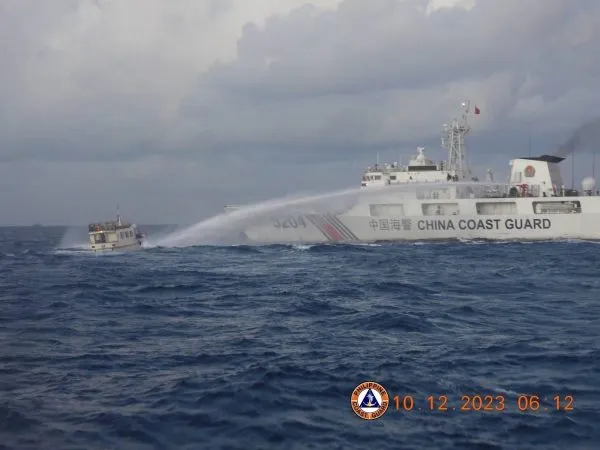
The pattern that has emerged over the past decade suggests Beijing calculates that strategic and economic interests outweigh any reputational cost of defying international legal frameworks. China has expanded artificial islands, deployed coast guard and maritime militia vessels, and repeatedly blocked or harassed vessels from neighboring states including the Philippines, Vietnam, and Malaysia operating within their own exclusive economic zones.
The Diplomat's analysis argues this dynamic has effectively forced other claimant states and outside powers to make difficult choices - between insisting on legal norms that carry no enforcement mechanism, or finding pragmatic accommodations with a more powerful neighbor.
Regional responses remain fragmented
Southeast Asian nations have responded differently to Beijing's posture. The Philippines, under President Ferdinand Marcos Jr., has taken a more assertive stance in recent years, publicly documenting Chinese interference with resupply missions to the disputed Second Thomas Shoal and deepening security cooperation with the United States. Vietnam has continued to develop its own occupied features while generally avoiding direct public confrontation. Other ASEAN members have remained more cautious, wary of economic dependencies on China.
The United States, which is not a party to the dispute but conducts regular freedom of navigation operations in the area, has reaffirmed the 2016 ruling as binding. However, Washington's ability to alter facts on the water remains limited.
A test case for rules-based order
Legal experts and regional analysts cited in the Diplomat piece describe the South China Sea as a test case for whether international law retains meaningful authority when a major power chooses to ignore it. The absence of any enforcement mechanism in the arbitration framework means compliance ultimately rests on political will and the costs a state is willing to absorb.
The analysis concludes that a decade on, the ruling has served more as a diplomatic reference point than a practical constraint on Chinese behavior, raising broader questions about the durability of international legal norms in an era of intensifying great-power competition.