In what diplomats are already calling a major breakthrough and cynics are calling "we'll believe it when we see it," the United States temporarily suspended sanctions on Iranian oil this Monday, following a statement by Vice President JD Vance that Tehran had agreed to welcome UN nuclear inspectors back into the country. According to reporting by France 24, the move marks a meaningful step forward in what has been a very long, very exhausting chapter of global geopolitics.
So what exactly happened here?
The short version: Iran said yes to letting International Atomic Energy Agency (IAEA) inspectors back in, and Washington responded by loosening the economic vice grip - at least temporarily. The slightly longer version involves months of renewed negotiations focused on two things that keep world leaders up at night: Iran's nuclear programme and the stability of the Strait of Hormuz, the narrow waterway through which roughly 20% of the world's oil supply travels on any given day.

Vance's announcement signals that back-channel diplomacy has been producing results, even as tensions in the broader Middle East have remained elevated. The suspension of sanctions on Iranian oil is not a permanent measure - it appears designed as a confidence-building gesture to keep negotiations on track rather than a full policy reversal.
Why does the Strait of Hormuz keep coming up?
Because it is basically the world's most critical oil chokepoint, and whenever US-Iran relations deteriorate, there is always the uncomfortable possibility that Iran could make life very difficult for tanker traffic passing through it. Stabilising that corridor is not just a geopolitical talking point - it has real consequences for global energy prices and, by extension, your petrol bill.

What does this mean for the nuclear question?
Getting IAEA inspectors back into Iran is genuinely significant. The inspectors had faced increasing restrictions in recent years, limiting the international community's ability to verify what Iran was actually doing with its nuclear infrastructure. Restored access does not mean the nuclear dispute is resolved - it means the two sides are at least talking in a way that produces measurable outcomes, which is more than could be said not long ago.
Whether this leads to a broader deal remains very much an open question. Iran has historically used sanctions relief as leverage in negotiations, and the US has historically used sanctions as leverage right back. Both sides are, in other words, very good at this particular game.
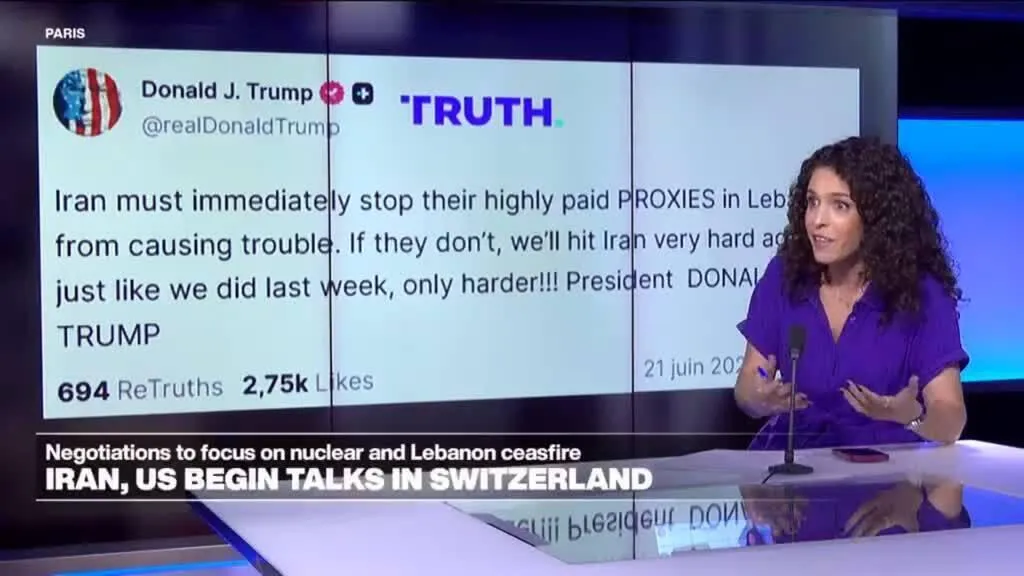
For now, the world gets a temporary exhale. The inspectors are headed back in, the sanctions are briefly loosened, and everyone is cautiously watching to see if this time the détente actually sticks.
Source: France 24