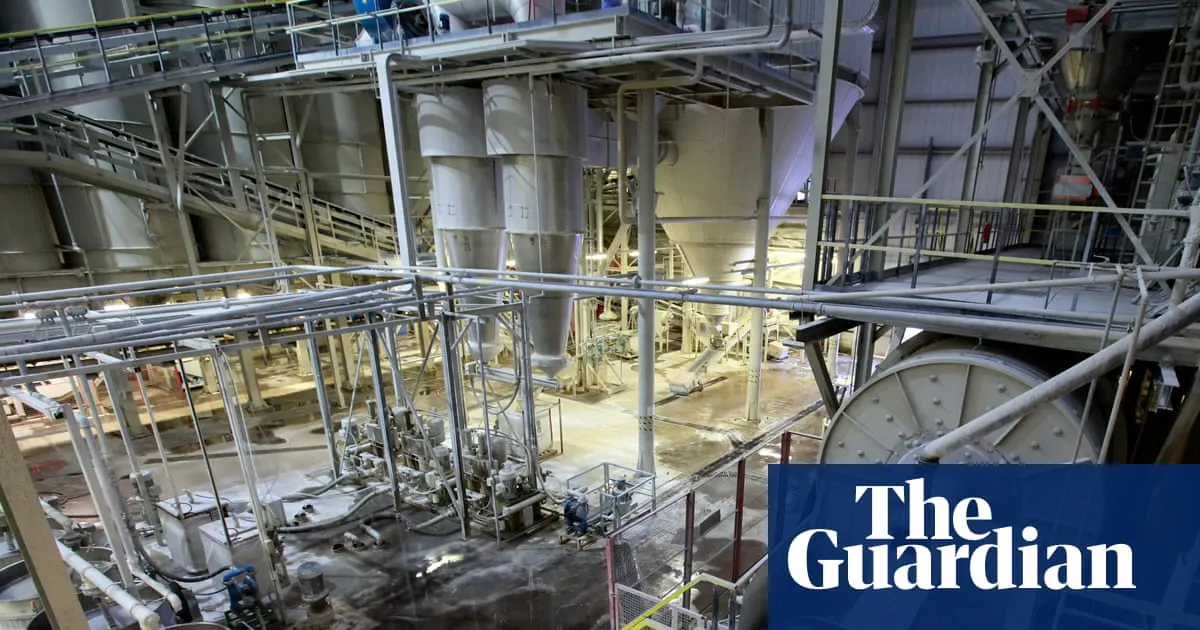
A Manchester-based startup has done what centuries of ceramics tradition said you simply couldn't do: make tiles without firing them in a kiln. And now, according to the Guardian, it's teaming up with one of the UK's largest tile suppliers to prove it at scale.
Dekiln - yes, that's really the name, and yes, it absolutely slaps - has signed a pilot deal with Johnson Tiles to set up a trial manufacturing site in Stoke-on-Trent. If you're not a ceramics nerd, Stoke-on-Trent is basically the spiritual homeland of British pottery. Doing kiln-free tile production there is the equivalent of announcing a beef-free burger in Texas.
So how does it actually work?
Dekiln was founded by Aled Roberts, a biomaterials engineer who apparently looked at the ceramics industry's enormous energy consumption and thought, 'surely not.' Traditional ceramic tile production relies on kilns that blast materials at extremely high temperatures - a process that is as energy-hungry as it sounds and a significant source of industrial carbon emissions.
Roberts' approach instead uses waste materials to produce ceramic-like tiles without that energy-intensive firing step. The result is a product with a dramatically lower carbon footprint, which in 2025's climate-conscious market is essentially a superpower.
Why this matters beyond just being cool
The British ceramics industry has been having a rough time. High energy costs - particularly brutal after the post-2022 energy price surge - have hammered domestic manufacturers, many of whom are clustered in Stoke-on-Trent. A technology that sidesteps the kiln entirely doesn't just cut emissions; it potentially slashes one of the industry's biggest operating costs.
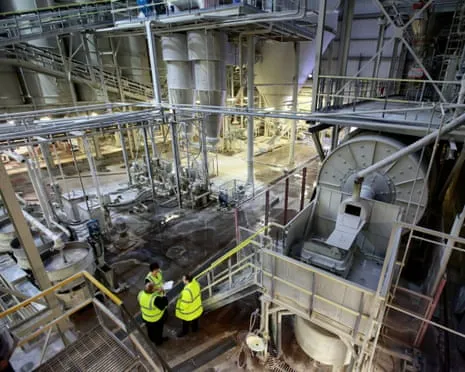
The pilot with Johnson Tiles is therefore a big deal on multiple levels. It's validation from an established industry player, it's a chance to stress-test the technology at real manufacturing scale, and it plants the flag for low-carbon ceramics right in the heart of the UK's traditional tile country.
The bigger picture
Dekiln is part of a broader wave of materials startups trying to decarbonize industries that don't get nearly as much green-tech attention as, say, electric vehicles or solar panels. Cement, steel, ceramics - these so-called 'hard to abate' sectors are responsible for a chunky slice of global emissions, and incremental efficiency gains aren't going to cut it.
Whether kiln-free tiles can match the performance, durability, and aesthetic range of traditional ceramics at commercial scale is exactly what this pilot is designed to find out. For now, Roberts and Johnson Tiles are betting they can - and the floors of Britain's bathrooms may never be the same again.
Source: The Guardian