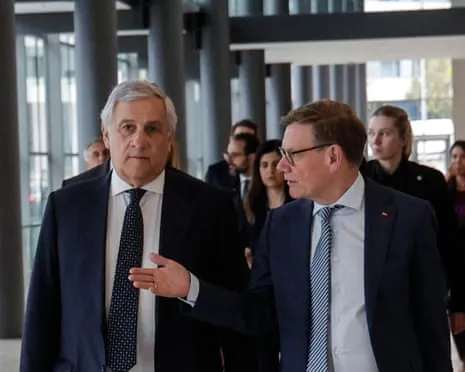
Spain, Slovenia and Ireland have formally requested that European Union foreign ministers discuss suspending the bloc's association agreement with Israel, according to statements made at a meeting of EU foreign ministers in Luxembourg on Monday.
Spain's Foreign Minister José Manuel Albares confirmed the move, according to reporting by The Guardian, signaling a push by at least three member states to escalate diplomatic pressure on Israel over its military conduct.
The association agreement, known formally as the EU-Israel Association Agreement, governs trade and political relations between Israel and the European Union. Suspending it would represent a significant diplomatic step, though any such decision would require broader consensus among EU member states.
Spain's position
Albares framed the request as a call for clarity from the European Union as a whole. The Spanish minister argued that the bloc needed to send a direct message to Israel that its current course of action was unacceptable, according to The Guardian's coverage of the meeting.
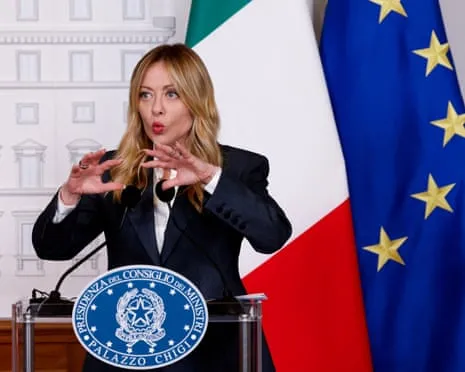
"The European Union has to say today very clearly to Israel that that change is needed," Albares said, as quoted by The Guardian. "That's not the right path, and that while Israel continues in that path of a permanent perpetual war" - his remarks were reported as continuing beyond what was captured in the available source material.
Broader agenda
The Luxembourg gathering was convened to address several pressing international issues, with Ukraine and Russia also on the agenda alongside the Middle East situation. The meeting reflects ongoing efforts by EU member states to coordinate foreign policy responses to multiple simultaneous crises.
The push by Spain, Slovenia and Ireland is not the first time member states have sought to use the association agreement as a lever. Calls for a review of the treaty have grown among some European governments in recent months amid sustained international concern over civilian casualties in Gaza.
Whether the request will gain sufficient traction among the broader group of EU foreign ministers remains to be seen. Decisions on matters of this diplomatic magnitude typically require agreement among member states, and positions within the EU on the Israel-Gaza conflict vary considerably.
The outcome of Monday's discussions in Luxembourg had not been reported at the time of publication.