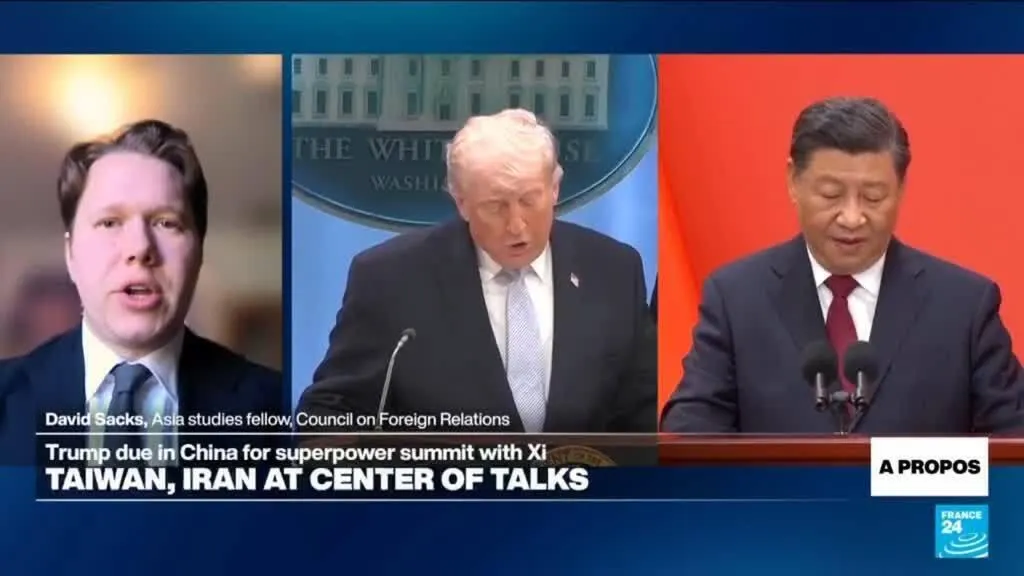
As US President Donald Trump meets with Chinese President Xi Jinping over two days of high-level talks, an expert on Asia policy has warned that Trump holds significant personal authority to alter longstanding American policy toward Taiwan, with limited ability for Congress to intervene.
David Sacks, a fellow for Asia studies at the Council on Foreign Relations, made the assessment in an interview with France 24's Sharon Gaffney. Sacks said Trump "could choose to change US policy towards Taiwan and Congress only has so many things that it can do to try to rein that in."
The remarks come as Trump and Xi hold meetings on Thursday and Friday, during which Taiwan is expected to feature prominently. Beijing considers Taiwan part of its own territory and has long pressed Washington to limit its support for the self-governing island.
A delicate balancing act
US policy toward Taiwan has historically rested on strategic ambiguity - a deliberate posture that neither explicitly commits to defending Taiwan militarily nor abandons it. That framework, maintained across decades and multiple administrations, has given Washington leverage while avoiding direct confrontation with Beijing.
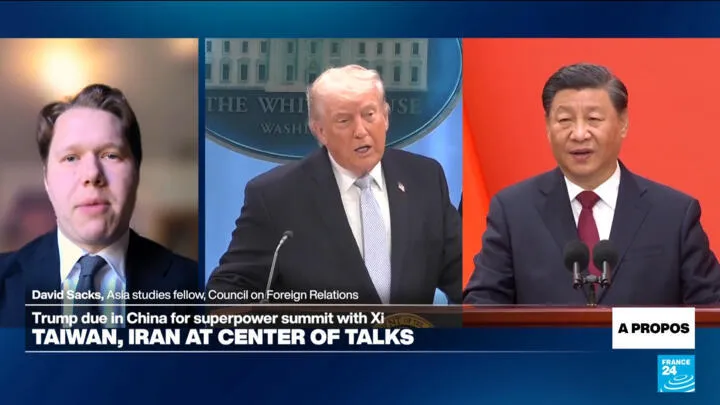
Sacks' warning underscores a concern held by some lawmakers and foreign policy analysts: that executive branch discretion in diplomacy could allow a sitting president to make significant informal or formal shifts in that posture without requiring congressional approval.
Congress has passed legislation such as the Taiwan Relations Act and, more recently, the Taiwan Policy Act, aimed at codifying elements of the US-Taiwan relationship. However, as Sacks indicated, the scope of legislative tools to constrain presidential decision-making in live diplomatic negotiations remains limited.
High stakes in Beijing
The Trump-Xi summit represents one of the most closely watched diplomatic encounters in recent memory given the range of unresolved issues between Washington and Beijing, including trade disputes, military tensions in the South China Sea, and the status of Taiwan.
Taiwan has not been formally represented in talks between the two leaders. The island's government and its supporters in the US have consistently urged Washington to maintain robust commitments to Taiwan's security and to resist pressure from Beijing to downgrade those ties.
It remains unclear what specific proposals or concessions, if any, have been or will be raised during the two-day meetings. No official statements detailing the agenda's specifics had been released at the time of Sacks' interview, according to France 24.