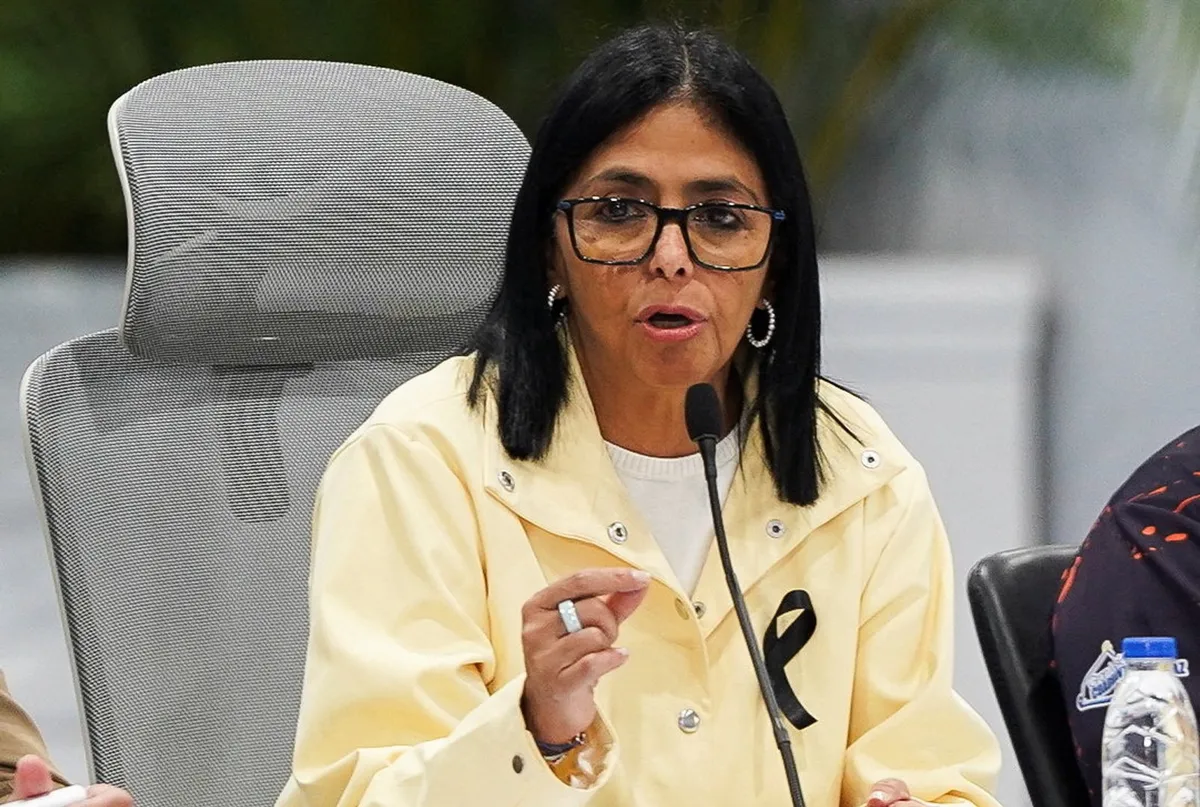
When a natural disaster strikes and the public is furious, there are a few classic political playbooks available. You can express solemn solidarity, promise swift action, or - if you are feeling particularly bold - point the finger somewhere else entirely. Venezuelan Vice President Delcy Rodriguez appears to have gone with option three.
Responding to a wave of public anger over the government's handling of the earthquake aftermath, Rodriguez pushed back against criticism by arguing that the vast majority of buildings that came down were not the state's problem to begin with. According to Al Jazeera, she claimed that 80% of the structures that collapsed during the earthquakes were privately developed - essentially framing the disaster as a failure of the private sector rather than of government oversight or emergency response.
A politically convenient statistic
Now, to be fair, private construction quality and building code enforcement are genuine issues across Latin America, and shoddy private development has absolutely contributed to earthquake casualties in the region historically. That is not a fabricated talking point. The problem, critics would argue, is that enforcing construction standards is... kind of the government's job? Regulation of private development does not happen in a vacuum.
The response comes amid what Al Jazeera described as significant public anger directed at the government over how it has managed the disaster response. Earthquakes have caused building collapses, and Venezuelans have been vocal about what they perceive as an inadequate or slow reaction from authorities.

The numbers game
Rodriguez's 80% figure is striking, but the source or methodology behind that statistic was not independently verified in the reporting available. Whether it is accurate, cherry-picked, or somewhere in between remains an open question - though in the current political climate in Venezuela, independent fact-checking of official government claims is, let's say, not the easiest exercise in the world.
What is clear is that the government is feeling the heat. When officials move from "we are doing everything we can" to "actually, this was private sector's fault," that is usually a sign that the criticism has landed hard enough to require a more aggressive deflection strategy.
The earthquakes and the political fallout are still developing stories. Al Jazeera continues to cover the situation as more details emerge about the scale of the damage and the adequacy - or lack thereof - of the official response.
For Venezuelans sifting through rubble, the question of who built the buildings is probably a distant second to the question of who is showing up to help right now.