For decades, Afghanistan has been the geopolitical equivalent of that one friend everybody quietly avoids at parties - associated with instability, conflict, and an endless parade of foreign policy headaches. But according to a new analysis published by The Diplomat, something quietly significant is shifting in how neighboring countries perceive the landlocked nation.
Afghanistan, it turns out, is getting a bit of a rebrand.
From liability to... asset?
The piece outlines how Afghanistan is no longer being viewed exclusively through the lens of risk - terrorism, drug trafficking, refugee flows - but is increasingly being framed by Central Asian states as a space of genuine economic and diplomatic opportunity. That is a remarkable pivot, and one that deserves more attention than it is currently getting.
Central Asian nations, many of which share borders or close geographic proximity with Afghanistan, have historically had complicated relationships with Kabul. But regional connectivity projects, trade corridors, and energy infrastructure ambitions are beginning to reframe the conversation. When your neighbor sits at the crossroads of South Asia, Central Asia, and the Middle East, eventually someone is going to notice the real estate value.
UNAMA's evolving role
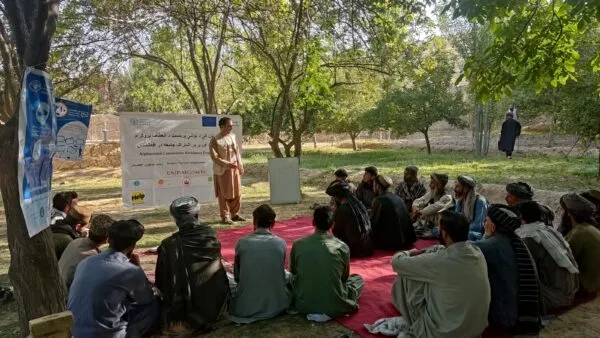
The United Nations Assistance Mission in Afghanistan (UNAMA) is also adapting to this shifting dynamic. Rather than operating purely in crisis-management mode, the mission is increasingly being called upon to facilitate regional dialogue and support frameworks that treat Afghanistan as a participant in - not just a problem for - its surrounding neighborhood.
This is no small thing. Getting multilateral institutions to update their operating assumptions is famously like turning an aircraft carrier with a canoe paddle.
Don't pop the champagne just yet
To be clear, none of this means Afghanistan has suddenly resolved its deep humanitarian crisis, its governance challenges under Taliban rule, or the profound restrictions on women's rights that continue to draw international condemnation. The opportunity framing coexists awkwardly with those realities, and any regional engagement strategy will have to wrestle with that tension head-on.
But the analysis in The Diplomat suggests that the binary of "Afghanistan as catastrophe" is giving way to something more complicated and, perhaps, more productive - a recognition that isolation has its own costs, and that cautious engagement might serve regional stability better than permanent quarantine.
Whether that optimism is warranted or just the latest in a long line of hopeful takes on a deeply difficult country remains to be seen. But for a nation that has spent generations being everyone else's worst-case scenario, even being called an "opportunity" feels like progress of some kind.