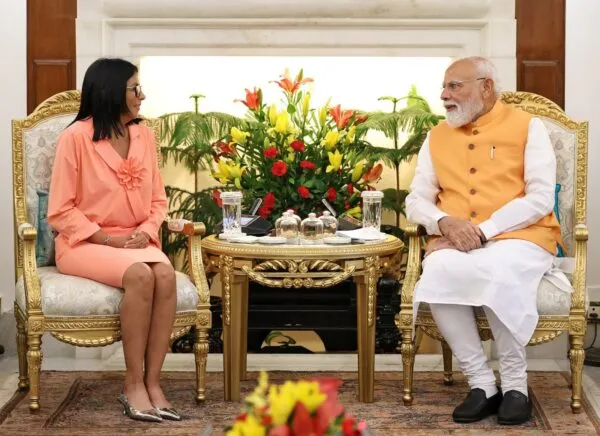
In what might be the most unintentionally helpful thing the United States has done for Venezuela in years, it was Washington - not New Delhi, not Caracas - that first announced Venezuelan Acting President Delcy Rodriguez's visit to India. Yes, the same United States that has spent years sanctioning Venezuela into economic oblivion apparently couldn't help itself from telegraphing the meeting before either party directly involved saw fit to do so.
The oil handshake nobody wanted to admit to
According to reporting by The Diplomat, the renewed diplomatic energy between India and Venezuela is hard to separate from crude oil - specifically, the kind that India badly wants and Venezuela desperately needs to sell. The U.S. role in all this is, to put it diplomatically (pun intended), complicated. Washington has long used sanctions as a pressure tool against the Maduro government, yet its own announcement of the Rodriguez visit suggests American awareness of - and possible tacit acceptance of - the oil trade resuming between the two countries.
India has been on a global oil shopping spree for years, having pivoted hard toward discounted Russian crude after the Ukraine war scrambled energy markets. Venezuelan heavy crude fits neatly into that strategy. Caracas, meanwhile, is in no position to be picky about customers.
Delcy Rodriguez lands in Delhi
Rodriguez, who serves as Venezuela's Acting President and is a senior figure in Nicolas Maduro's government, made the trip to India as part of what appears to be a broader Venezuelan effort to rebuild economic bridges outside the Western sphere of influence. India, for its part, has consistently maintained its foreign policy doctrine of strategic autonomy - a polite way of saying it will buy oil from wherever it pleases, thank you very much.
The timing is notable. Maduro's government has faced renewed international pressure over democratic backsliding, and yet here is one of its top officials landing in one of the world's largest democracies for what looks like a fairly warm reception.
So why did the U.S. announce it first?
That question, raised pointedly by The Diplomat, does not have a clean answer. It could reflect internal U.S. monitoring of Venezuelan diplomatic movements. It could be a signal. It could be bureaucratic miscommunication. Or it could be that Washington, quietly, is not entirely opposed to India absorbing some Venezuelan oil supply - particularly if it keeps Delhi from deepening energy dependence on Moscow.
Whatever the reason, the optics are genuinely funny: the country that sanctioned Venezuela ended up doing its PR for a diplomatic trip aimed at expanding Venezuela's economic lifelines. Peak geopolitics, honestly.