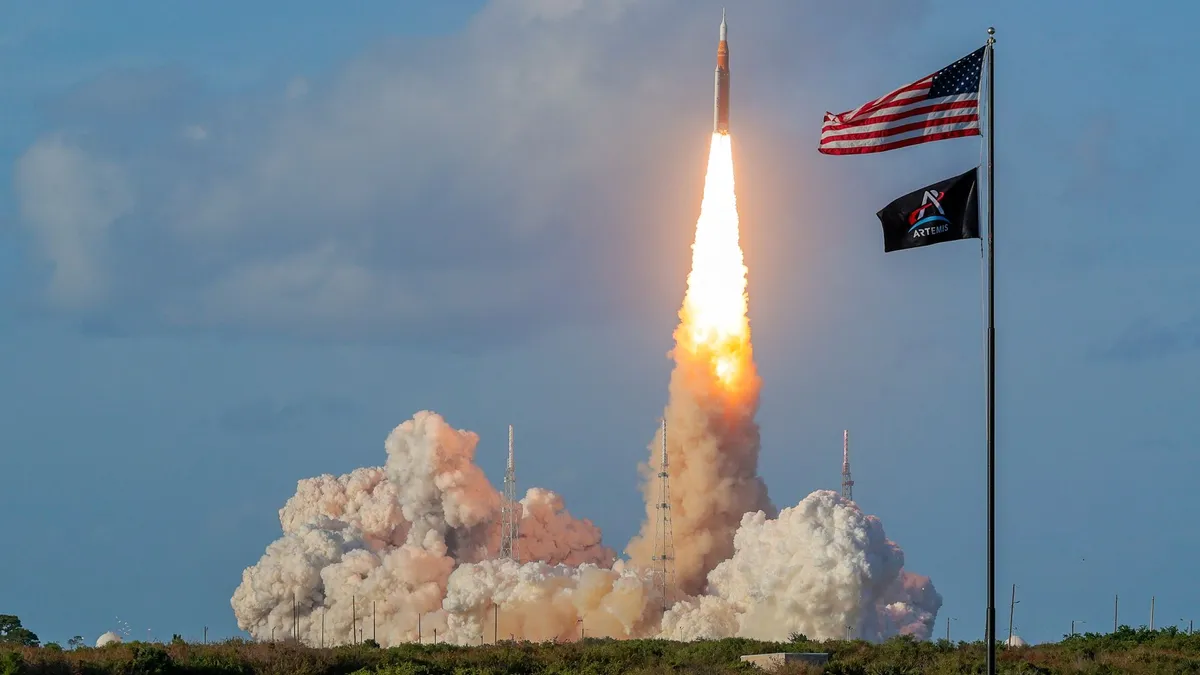
NASA's Artemis II mission lifted off from the John F. Kennedy Space Center in Florida on Wednesday at 6:35 p.m. ET, sending a crew toward the Moon for the first time since the Apollo program ended in 1972, according to Axios.
The launch represents the first crewed lunar flyby in over half a century and is widely regarded as a critical milestone in NASA's broader effort to return astronauts to the lunar surface.
What the mission involves
Artemis II is a crewed flyby, meaning the astronauts aboard will travel around the Moon without landing. However, the trajectory is expected to bring the crew closer to the Moon than any humans have been since the final Apollo missions, making it a significant achievement in its own right.
The mission serves as a proving ground for the systems, hardware, and crew procedures that NASA intends to rely on for subsequent Artemis flights - including Artemis III, which is planned to actually land astronauts on the lunar surface.
Political significance
President Trump congratulated NASA and the astronauts following the successful launch, according to Axios. The mission aligns with the Trump administration's stated interest in establishing a permanent human presence on the Moon, a goal that carries both scientific and geopolitical dimensions as nations including China pursue their own lunar ambitions.
Broader context
The Artemis program has faced years of delays and significant cost overruns since its inception. Wednesday's launch marks the program's first crewed test flight, following the uncrewed Artemis I mission in late 2022, which successfully flew around the Moon and returned to Earth.
A successful Artemis II mission would validate NASA's Space Launch System rocket and the Orion spacecraft under real crewed conditions, paving the way for the agency's long-term goal of sustained human operations on and around the Moon.
The mission is being watched closely by space agencies and the commercial sector alike, as NASA has partnered with private companies - including SpaceX and others - for elements of its lunar exploration architecture.