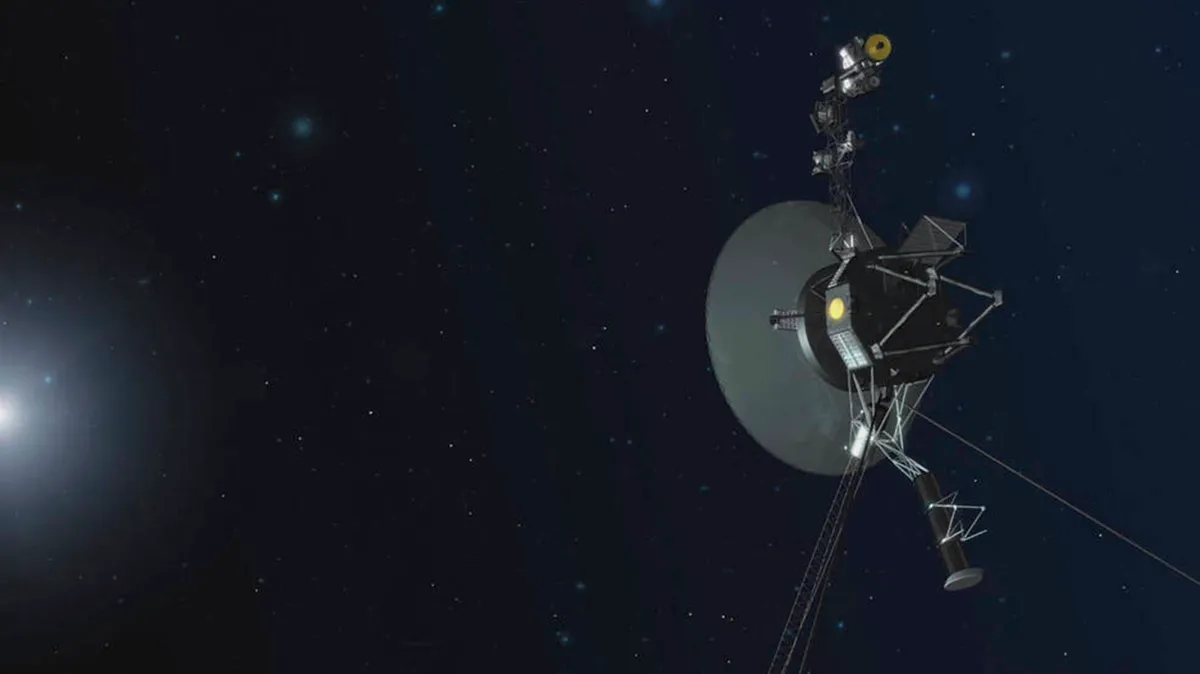
NASA has shut down one of the remaining science instruments aboard Voyager 1, the agency announced this week, in a deliberate effort to preserve the spacecraft's dwindling power supply and extend its operational life.
The move is not a sign of mission failure. Rather, it reflects the careful rationing required to keep a probe that has been traveling through space for nearly five decades functioning at all, according to reporting by NPR.

Why the shutdown was necessary
Voyager 1, launched in 1977, is the most distant human-made object ever built. It crossed into interstellar space - the region beyond the Sun's sphere of influence - more than a decade ago, providing scientists with their only direct measurements from that environment.
The spacecraft is powered by a radioisotope thermoelectric generator, which converts heat from decaying plutonium into electricity. That power output decreases by roughly four watts per year. With the total available power now critically limited, NASA engineers face difficult tradeoffs about which systems to keep running.
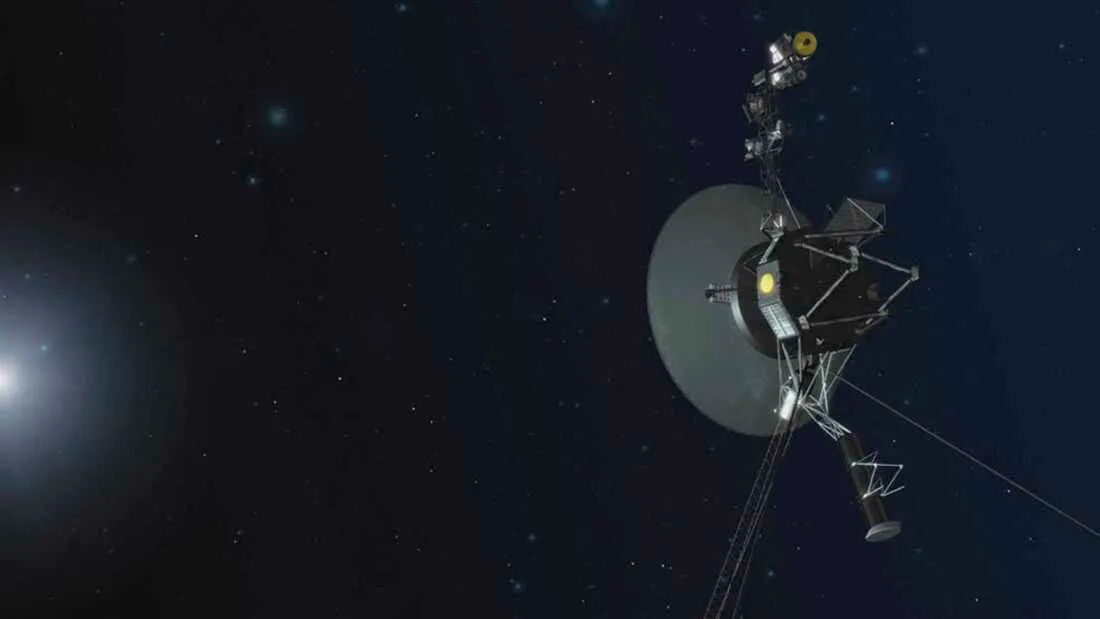
By switching off one instrument, the agency aims to redirect enough electricity to sustain the probe's other functions, including communication with Earth, for additional years.
What Voyager 1 still represents
Despite its age, Voyager 1 remains scientifically valuable. It continues to send back data from interstellar space, a region no other spacecraft has reached. Researchers use that information to better understand the boundary between the heliosphere - the vast bubble created by the Sun's solar wind - and the space between stars.
The spacecraft's longevity has already far exceeded initial expectations. Its primary mission was to conduct flybys of Jupiter and Saturn, which it completed in the late 1970s and early 1980s. The interstellar phase of its journey was not part of the original plan.
A long goodbye
NASA has made similar power-conservation decisions for Voyager 1 and its twin, Voyager 2, in recent years. Each instrument shutdown marks another step in a gradual winding down that engineers and scientists acknowledge is inevitable.
At some point, the spacecraft will no longer generate enough power to transmit signals back to Earth. When that happens, contact with humanity's most distant ambassador will be lost permanently.
For now, mission controllers say the latest measure should buy additional time - though they have not specified exactly how much longer the spacecraft can remain active. The goal, they indicate, is to extract as much scientific data as possible from a machine that has, by any measure, already outlasted all expectations.