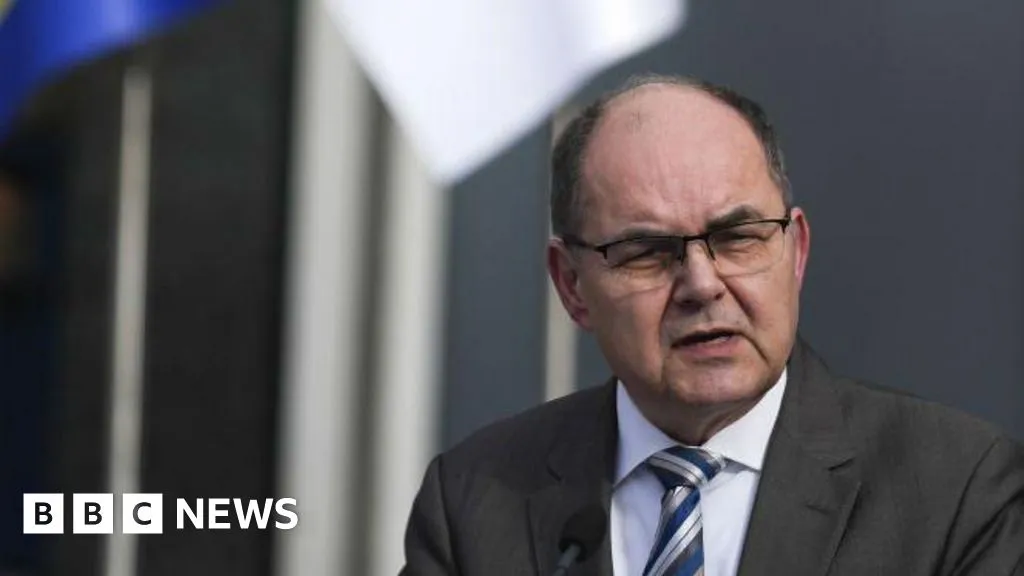
Christian Schmidt, the High Representative for Bosnia and Herzegovina - essentially the closest thing the modern world has to a colonial-era governor-general - has announced his resignation, according to a BBC report. Schmidt, who has held the role since 2021, appears to have lost the crucial backing of the United States, raising serious questions about whether anyone will actually replace him, or whether the position itself is headed for the history books.
So what exactly is this job?
The High Representative is not your average diplomat. The role was established following the 1995 Dayton Peace Agreement that ended the Bosnian War, and it comes loaded with what are known as the "Bonn Powers" - a remarkable toolkit that allows the occupant to dismiss elected officials and impose laws unilaterally if they decide the peace process is being threatened. In practice, it means one person can override an entire government. Pretty powerful stuff for a job most people outside the Balkans have never heard of.

Schmidt, a German politician, used those powers on several occasions during his tenure, most notably in efforts to push back against Bosnian Serb leader Milorad Dodik, who has spent years attempting to pull the Republika Srpska entity away from central Bosnian institutions - a move critics describe as a slow-motion dismantling of the Dayton framework.
Why is the US angle a big deal?
The High Representative's authority rests significantly on the geopolitical muscle of its backers, particularly the United States. Without Washington's enthusiastic support, the role becomes considerably less scary to the regional actors it is meant to keep in check. The BBC report suggests Schmidt's departure follows a cooling of American enthusiasm for his continued tenure, though the precise details remain unclear.

The timing raises uncomfortable questions. Bosnia's fragile internal politics are already under significant strain, and Dodik has been emboldened in recent years, even facing US sanctions. Leaving the High Representative's office either vacant or weakened at this moment is, to put it diplomatically, not ideal.
What comes next?
That is the million-dollar - or perhaps million-euro - question. The Peace Implementation Council, the international body overseeing the role, will need to agree on a successor. Given the current state of transatlantic relations and the general enthusiasm for cutting international commitments in some Western capitals, that process is unlikely to be quick or smooth.
For a country still navigating the aftermath of a devastating war and the perpetual dysfunction of its Dayton-designed government structure, the prospect of an empty chair in the High Representative's office is not exactly reassuring.