
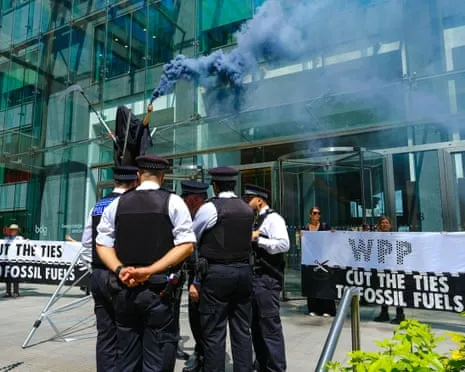
London-based advertising conglomerate WPP has been accused of spectacularly failing its own climate policy, after a new report revealed the firm helped some of the world's biggest oil companies spend an estimated $1.5 billion (roughly £1.1 billion) on US advertising since the 2015 Paris climate agreement, according to a report covered by The Guardian.
That's not a typo. One-point-five billion dollars. On ads. For oil companies. From a firm that, by all accounts, has a climate policy it presumably keeps framed somewhere nice in a London boardroom.
Who's involved and what did they allegedly do?
According to analysis cited by The Guardian, WPP was the single leading advertising group serving the US oil industry over the past decade - linked to roughly twice the oil advertising volume of its American rivals. The clients allegedly included the fossil fuel hall of fame: ExxonMobil, Chevron, Shell and BP.
For context, the Paris agreement was supposed to be humanity's big "okay, we're serious now" moment on climate change. The year 2015 was when governments globally pledged to limit warming and transition away from fossil fuels. It was also apparently a solid year to start building a very lucrative oil advertising portfolio.

What does WPP say about its climate commitments?
This is where it gets spicy. WPP has publicized climate commitments and policy positions that critics now argue are fundamentally incompatible with running billion-dollar image campaigns for oil majors. The report accuses the firm of breaching its own stated climate policy - which is the corporate equivalent of a personal trainer eating a gas station hot dog at the gym.
The Guardian's reporting does not include a formal denial or detailed response from WPP within the summarized material, so their side of the story remains to be fully heard.

Why does advertising for oil companies matter?
This is not just about selling petrol. Greenwashing - the practice of making environmentally damaging companies appear eco-friendly through carefully crafted messaging - has become a major battleground in climate accountability. Regulators in both the UK and EU have been tightening rules around misleading environmental claims, and the advertising industry's role in enabling these campaigns is increasingly under the microscope.
When major oil firms spend hundreds of millions on ads, a significant chunk of that goes toward projecting images of clean energy investment, environmental stewardship and responsible futures - messages that critics argue are wildly disproportionate to the companies' actual business activities.
Whether WPP faces any formal consequences remains to be seen. But in an era where corporate climate credibility is being stress-tested harder than ever, a $1.5 billion paper trail is a tough thing to rebrand your way out of.