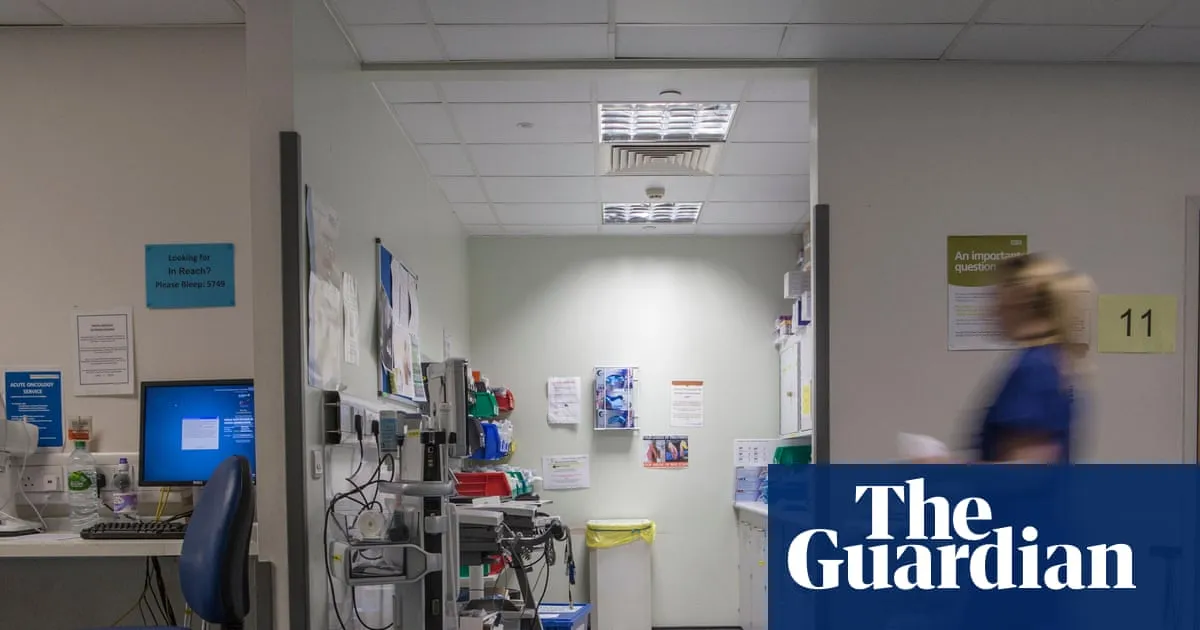
If you thought the NHS waiting list situation couldn't get more grim, buckle up. New NHS figures reported by The Guardian reveal that children and young people in England experiencing acute mental health crises are being left to wait in Accident and Emergency departments for up to three full days before a bed in a specialist unit becomes available.
Three days. In an A&E ward. For a child in mental health crisis. Let that sink in for a moment.
What the numbers are telling us
The figures paint a deeply uncomfortable picture of a system that is, by most reasonable definitions, not coping. Under-18s in acute psychological distress - the kind of distress that sends someone to an emergency department in the first place - are increasingly getting stuck in environments that are loud, clinical, and fundamentally not designed to support their needs.
The Royal College of Nursing, via its nurses' union arm, has not minced words, describing the situation as a 'catastrophic system-wide failure'. That is not the language of a group quietly raising a concern. That is an alarm being pulled.
'Frankly barbaric' - and becoming normal
One children's nurse working in an emergency department told The Guardian that these prolonged waits for young patients in acute distress were 'frankly barbaric' - but also, chillingly, that they are 'becoming far more normal.'
That normalisation is arguably the most worrying detail in the entire story. Systems tend to quietly adapt around dysfunction until the dysfunction becomes the baseline. When frontline nurses start describing three-day A&E waits for distressed children as routine, something has gone very structurally wrong.
Why is this happening?
The core issue, as reported, is a shortage of specialist inpatient beds for children and young people with mental health needs. When those beds are full - and they are frequently full - children have nowhere to go after an emergency assessment, leaving A&E departments holding patients they are not equipped to properly support.
Emergency wards are built around physical triage, noise, rotating staff, and fast throughput. They are about as far from a therapeutic environment as you can get without actually trying to make things worse.
The bigger picture
Child and adolescent mental health services (CAMHS) in England have been under sustained pressure for years, with demand consistently outpacing capacity. This latest data, as covered by The Guardian, suggests that the pressure is no longer just in outpatient waiting lists - it is now visibly spilling into emergency care in ways that are hard to ignore.
Advocates and healthcare unions are calling for urgent investment in specialist beds and a rethink of how the system routes young people in crisis. Whether that call gets a meaningful response remains, as usual, to be seen.