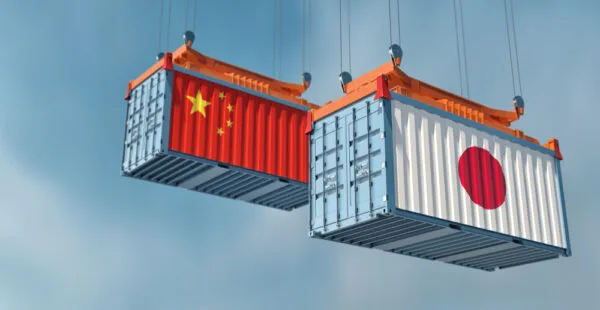
China has moved to impose economic sanctions against Japan in what analysts are describing as a notable shift in Beijing's strategic posture toward one of its closest regional rivals, according to an assessment published by The Diplomat.
The sanctions represent a departure from China's typical approach to managing tensions with Japan, a country with which it maintains deep and complex economic interdependence. The two nations are major trading partners, making any deliberate economic pressure campaign a potentially costly measure for both sides.
A shift in strategy
According to The Diplomat's analysis, the move reflects a recalibration in how Beijing chooses to respond to perceived provocations or policy disagreements with Tokyo. Rather than relying primarily on diplomatic protests or rhetorical pressure, China appears to be increasingly willing to deploy economic tools as instruments of foreign policy leverage.
The strategy mirrors approaches China has previously used against other countries, including Australia and South Korea, when bilateral disputes escalated. In those cases, Beijing targeted specific industries or export categories to apply pressure while attempting to limit broader economic blowback on its own economy.
Potential consequences
The sanctions carry significant risks for both parties. Japan-China trade ties are deeply embedded across multiple sectors, including manufacturing, technology, and rare earth supply chains. Any sustained disruption could reverberate through global supply networks that depend on smooth economic relations between the two nations.
For Japan, the sanctions present both an economic challenge and a political test. Tokyo will face pressure to respond without significantly escalating tensions, while also reassuring domestic industries that may be directly affected by Chinese measures.
China, meanwhile, risks accelerating Japanese efforts to diversify supply chains and reduce economic dependence on the mainland - a trend already underway among several major economies following earlier disputes involving Beijing's use of trade as a political tool.
Regional implications
The development is likely to draw close attention from other regional actors, particularly South Korea, Taiwan, and members of the Association of Southeast Asian Nations, all of whom maintain significant economic ties with China and watch carefully for signs of how Beijing manages its economic relationships under political strain.
The United States, which maintains a security alliance with Japan, may also factor into the broader strategic calculation, as Washington has been working to deepen economic and security coordination with Tokyo amid rising tensions across the Indo-Pacific region.
The full scope and duration of the sanctions, as well as Tokyo's formal response, will be critical in determining whether this episode marks a temporary escalation or a more lasting transformation in one of Asia's most consequential bilateral relationships, according to The Diplomat's assessment.