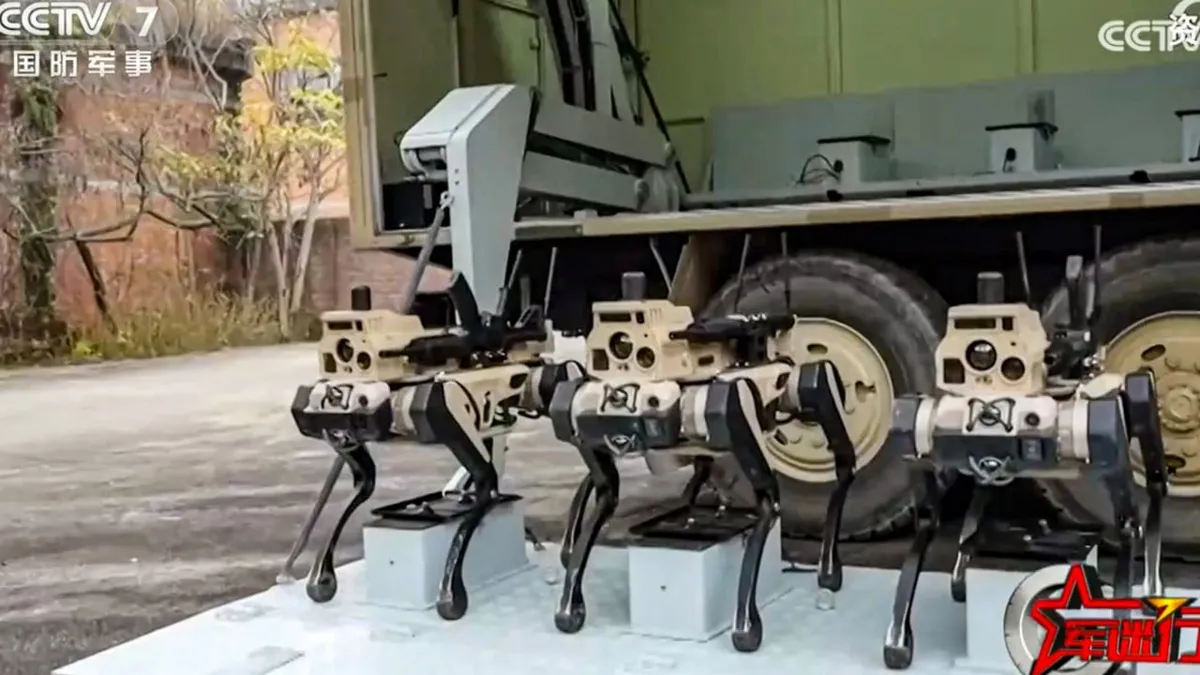
If you thought robot dogs were just a quirky Silicon Valley flex, China's defence industry would like a word. At the 2026 Chengdu Defence Technology Industry Expo, held in mid-April, the People's Liberation Army's industrial partners rolled out a showcase of autonomous military hardware that is equal parts impressive and unsettling - depending on which side of the torpedo tube you're standing on.
The star of the show: submarine-launched underwater drones
According to reporting by the South China Morning Post, the most headline-grabbing reveal was a series of autonomous underwater vehicles (AUVs) designed to be fired directly from a submarine's torpedo tubes - specifically the 260mm and 533mm varieties. Once deployed, these little underwater robots are built to conduct high-precision deep-ocean surveys and seabed reconnaissance, and crucially, to neutralise sea mines using AI-enabled targeting systems.
Think about that for a second. A submarine quietly parks somewhere inconvenient, fires off a swarm of robot scouts that then go about defusing mines and mapping the ocean floor, all without a human hand on the wheel. The choreography of modern naval warfare is getting very, very weird.
Robot dogs also showed up, because of course they did
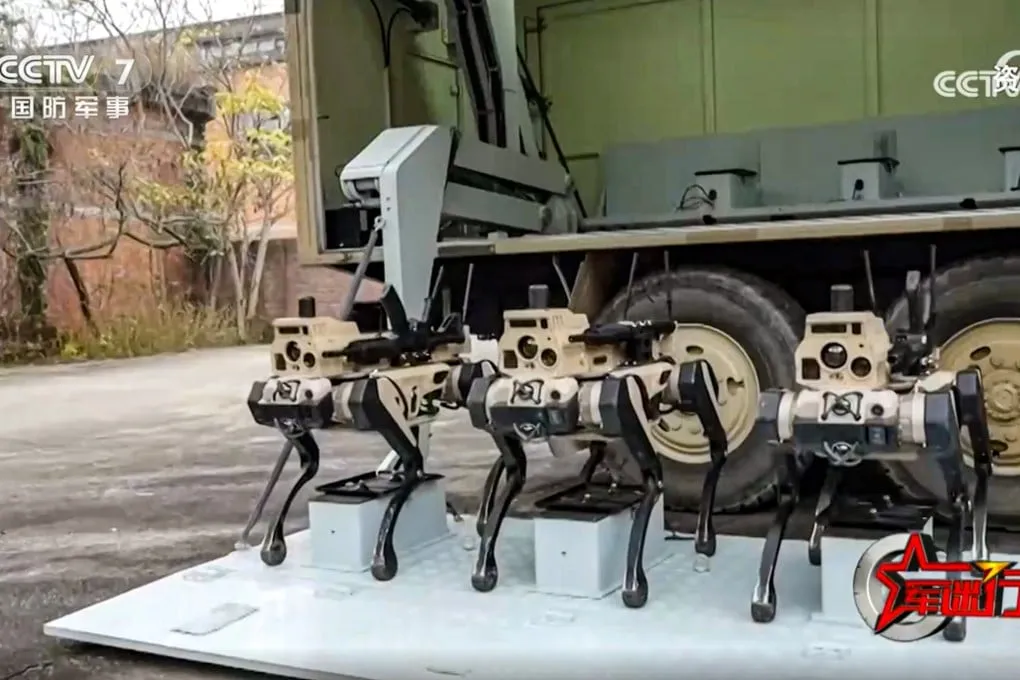
The expo did not stop at aquatic autonomy. Robot dogs - four-legged autonomous platforms that have become something of a mascot for next-generation military robotics globally - also featured prominently at the Chengdu event, per the SCMP. China has been accelerating its investment in ground-based autonomous systems, and seeing legged robots at a defence expo is rapidly becoming as routine as seeing tanks at one.
Why this matters beyond the cool factor
China's defence expos have increasingly become venues for signalling strategic priorities, not just flogging hardware to procurement officers. The emphasis on underwater autonomous systems is particularly pointed given ongoing tensions in the South China Sea, where seabed infrastructure, naval chokepoints, and mine-laying capabilities are all live strategic concerns.
The AI-enabled mine-neutralisation angle is especially notable. Clearing sea mines has historically been one of the most dangerous and painstaking jobs in naval warfare. Automating it - and launching the tools to do it from a submerged submarine - compresses both the risk and the operational timeline considerably.
Whether these systems are production-ready or still firmly in the "impressive prototype" category remains unclear from available reporting. Defence expos everywhere have a long tradition of showing things that are closer to PowerPoint than production line. But the direction of travel is unmistakable.
China is not the only country racing toward undersea and ground-based autonomy, but it is clearly not hanging around waiting for others to set the pace either.