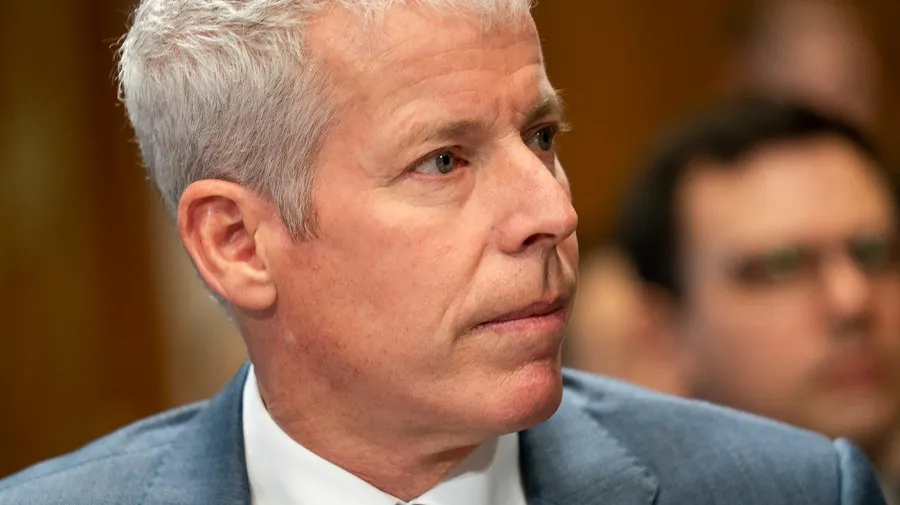
U.S. Energy Secretary Chris Wright said Sunday that American consumers should not expect gasoline prices to fall below $3 per gallon anytime soon, with the timeline potentially stretching into next year.
Speaking on CNN's "State of the Union" with host Jake Tapper, Wright offered an uncertain outlook when asked about relief at the pump.
"I don't know. That could happen later this year. That might not happen until next year," Wright said.
The comments come as energy prices face upward pressure linked to Iran's restrictions on commercial shipping through the Strait of Hormuz, one of the world's most critical chokepoints for global oil transit. A significant share of the world's seaborne oil passes through the narrow waterway between Iran and Oman, meaning any disruption there can ripple quickly into international crude markets and, eventually, consumer fuel prices.
A pressure point for household budgets
For millions of American households, the price of gasoline remains one of the most visible and politically sensitive economic indicators. Prices below $3 per gallon have historically been associated with periods of economic relief for consumers, particularly those in rural areas or with long commutes who have limited alternatives to driving.
The national average for regular unleaded gasoline has fluctuated considerably in recent years, shaped by pandemic-era demand swings, the war in Ukraine, and ongoing tensions in the Middle East.
Geopolitical factors complicating the outlook
Iran's actions in the Strait of Hormuz add a geopolitical dimension to what might otherwise be a straightforward supply-and-demand question. Analysts have long identified the strait as a vulnerability in global energy supply chains, and any sustained interference with shipping there tends to keep crude oil prices elevated.
Wright's remarks reflect the difficulty of forecasting energy prices in an environment shaped as much by diplomatic and military developments as by market fundamentals. The energy secretary did not specify what policy measures, if any, the administration was considering to help bring prices down.
The Biden-to-Trump administration transition has brought new priorities to U.S. energy policy, with the current administration emphasizing domestic fossil fuel production as a lever for lowering prices. However, as Wright's comments suggest, global factors outside Washington's direct control continue to set the ceiling on how quickly relief can reach consumers at the pump.
The Hill first reported Wright's remarks following the Sunday broadcast.